App of the week: Boid for Twitter (Beta)

When Android 4.0 came out, Matias Duarte, Google’s head of Android design, laid out a set of rules for ‘Holo’ style applications to go with the sweeping UI changes brought in by Ice Cream Sandwich. The guidelines have been adopted slowly, but the apps that have adopted them have risen to the top of their respective categories. One of these apps is Boid, a free Twitter client.

Team Boid set out with one objective – to make the best Twitter client. It makes effective use of the space on the screen, providing a tabbed interface that covers the entirety of Twitter. It also follows the Android design guidelines to the dot, making it a pleasure to use. The app is currently in beta, but don’t let that deter you from downloading it. The app is stable and packed full of features. The only notable omissions are autocompletion of usernames and push notifications, although both of these are planned for future releases. The team keeps users updated constantly through their Twitter account, and they have promised to push on with development (and a Chrome version) in the face of Twitter’s API changes.

[youtube http://www.youtube.com/watch?v=mDBSoOdzBig]

Boid is available on Google Play for free, and I have been assured by the team that it will stay that way, and it is ideal for casual tweeters and power users alike.

Boid for Twitter (Beta), Android, Free
Download it from Google Play or visit the website

Amazon ventures into social gaming with the release of Living Classics for Facebook


null

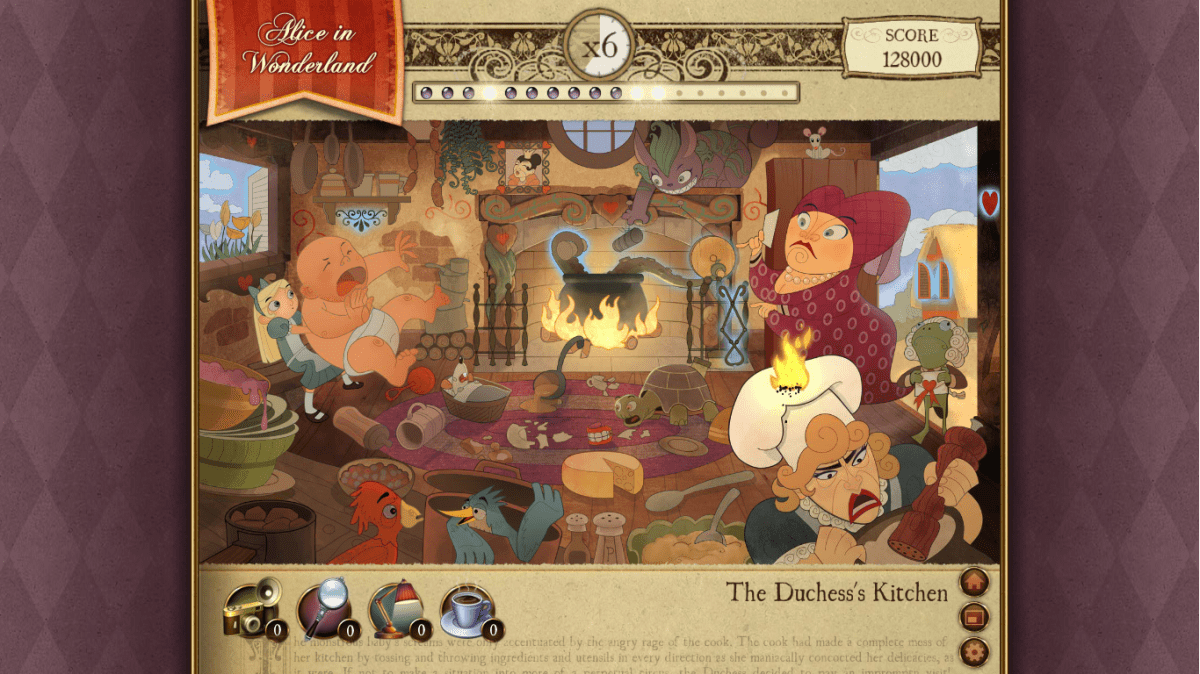
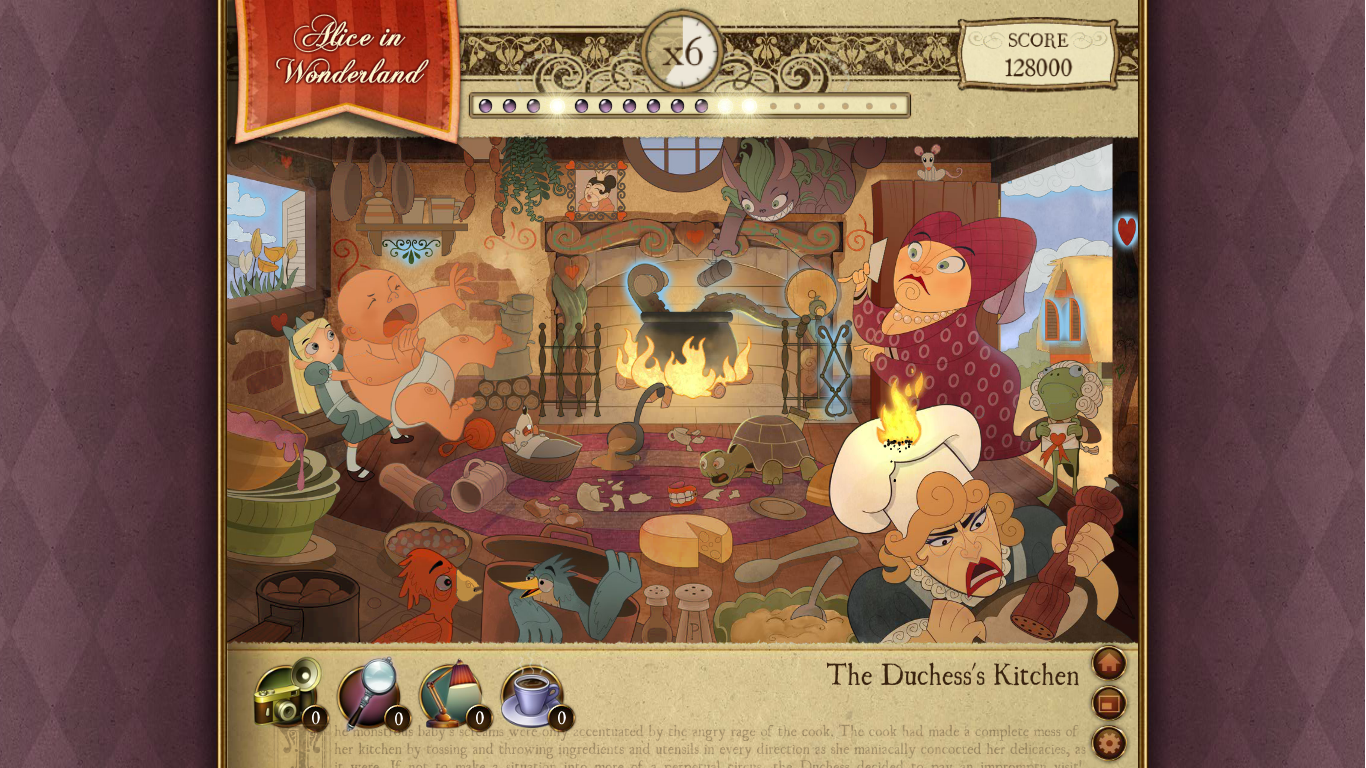
Having made a big hiring push earlier this year, the first product of Amazon’s push into the potentially lucrative social gaming market has been unveiled. Living Classics is a hidden object game that encourages players to find moving objects in worlds inspired by classic books such as Alice In Wonderland and while it is free-to-play, users are inundated with opportunities to buy cash and coins, which in turn unlock new levels and give you more ‘energy’ with which to play. On the studio website, the AGS team explained what led the e-commerce giant into the social gaming market, where even companies such as Zynga continue to stumble.

We know that many Amazon customers enjoy playing games – including free-to-play social games – and thanks to Amazon’s know-how, we believe we can deliver a great, accessible gaming experience that gamers and our customers can play any time.

Whether this venture will prove profitable for Amazon remains to be seen. If Living Classics sounds like your kind of social game, watch the trailer below and give the game a whirl yourself over on Facebook.

[youtube https://www.youtube.com/watch?v=Ml-jlpds90o]

Via John Herrmann (Twitter)
Source Amazon Game Studios


Spool shuts down after Facebook acquisition

Earlier this year we wrote about Spool, an up-and-coming service that promised to take on Readability and Read It Later (now Pocket). Today users were emailed to inform them that the service, still in private beta, was to be shut down immediately despite a $1 million round of funding, but a blog post on the company’s site has made things clearer. The team has confirmed that they will be joining Facebook’s mobile department and issued instructions on how to recover your Spools, but there is no mention on an acquisition figure. Needless to say, we are intrigued as to what Facebook are planning to do with Spool and what the acquisition could mean for the company’s mediocre mobile arm.

Via Josh Constine (Twitter)

avichal's avatar

We started Spool to make content easy to consume on a mobile device. To accomplish this, we built some very sophisticated technology and developed a deep expertise in mobile software development. We firmly believe that solving these problems will be increasingly important as the world accesses the Internet primarily through mobile devices.

We are proud to announce that today we will be pursuing our vision as a part of Facebook. If you were a Spool user, please read the instructions on retaining your bookmarks.

We are extremely excited to accelerate our vision and help Facebook’s users connect and share with the people in their lives. We wouldn’t be in a position to have this sort of impact without our supporters and the Spool community. Please accept a heartfelt thank you for supporting us and for affording us this opportunity.

Sincerely,
The Spool team

View original post

Microsoft to buy enterprise social network Yammer for $1.2 billion

Seemingly unwilling to let anyone else have any limelight, Microsoft today confirmed their oft-rumoured acquisition of self-proclaimed enterprise social network Yammer. Having announced a deal for $1.2 billion in cash for the company, Microsoft plans to combine the network, which launched in 2008 and has been presented with various collaboration awards, with its SharePoint collaboration tool to provide a market-leading enterprise experience, proving that it’s not all about the consumer to Ballmer and the folks in Redmond. To help illustrate their point, the company made up a handy infographic explaining why Yammer and Microsoft are a perfect fit for each other, along with the obligatory press release that can be found below.

REDMOND, Wash., and SAN FRANCISCO — June 25, 2012 — Microsoft Corp. and Yammer Inc. today announced that they have entered into a definitive agreement under which Microsoft will acquire Yammer, a leading provider of enterprise social networks, for $1.2 billion in cash. Yammer will join the Microsoft Office Division, led by division President Kurt DelBene, and the team will continue to report to current CEO David Sacks.

“The acquisition of Yammer underscores our commitment to deliver technology that businesses need and people love,” said Steve Ballmer, CEO, Microsoft. “Yammer adds a best-in-class enterprise social networking service to Microsoft’s growing portfolio of complementary cloud services.”

Launched in 2008, Yammer now has more than 5 million corporate users, including employees at 85 percent of the Fortune 500. The service allows employees to join a secure, private social network for free and then makes it easy for companies to convert a grassroots movement into companywide strategic initiative.

Yammer will continue to develop its standalone service and maintain its commitment to simplicity, innovation and cross-platform experiences. Moving forward, Microsoft plans to accelerate Yammer’s adoption alongside complementary offerings from Microsoft SharePoint, Office 365, Microsoft Dynamics and Skype.

“When we started Yammer four years ago, we set out to do something big,” Sacks said. “We had a vision for how social networking could change the way we work. Joining Microsoft will accelerate that vision and give us access to the technologies, expertise and resources we’ll need to scale and innovate.”

The acquisition is subject to customary closing conditions, including regulatory approval.

About Yammer

Yammer (www.yammer.com) is a leading provider of enterprise social networks with over 5 million verified corporate users including employees of more than 85 percent of the Fortune 500. The basic version of Yammer is free, and customers can pay to upgrade their network to receive advanced administrative and security controls, integrations with enterprise applications, priority customer service and a designated customer success manager.

About Microsoft

Founded in 1975, Microsoft (Nasdaq “MSFT”) is the worldwide leader in software, services and solutions that help people and businesses realize their full potential.

Note to editors: For more information, news and perspectives from Microsoft, please visit the Microsoft News Center at http://www.microsoft.com/news. Web links, telephone numbers and titles were correct at time of publication, but may have changed. For additional assistance, journalists and analysts may contact Microsoft’s Rapid Response Team or other appropriate contacts listed at http://www.microsoft.com/news/contactpr.mspx.

Forward-Looking Statements

This press release contains forward-looking statements, which are any predictions, projections or other statements about future events. Actual results may differ materially from these forward-looking statements because of a variety of risks and uncertainties about our business, which we describe in our filings with the Securities and Exchange Commission, including our Forms 10-K and 10-Q. We do not undertake any duty to update any forward-looking statement.

6.5 million LinkedIn passwords leaked by Russian hackers

Are you a LinkedIn user? If so, you might want to change your passwords, as 6.5 million passwords belonging to users of the business-centric social network have been leaked onto a Russian hacking forum. The dump contained unsalted passwords hashed using the SHA-1 encryption system, meaning that they are easily decryptable using online tools. No other information has been released, but it is possible that usernames and passwords were also compromised during the attack. Remarkably, LinkedIn’s share price ended the day up 0.09%, only to fall in after hours trading.

https://twitter.com/ryan/status/210404041031815169

In a blog post regarding the attack and password dump, LinkedIn’s Vincente Silveira explained how the company plans to deal with the compromised accounts, which make up for a small fraction of the network’s reported 161 million users.

We want to provide you with an update on this morning’s reports of stolen passwords. We can confirm that some of the passwords that were compromised correspond to LinkedIn accounts. We are continuing to investigate this situation and here is what we are pursuing as far as next steps for the compromised accounts:

  1. Members that have accounts associated with the compromised passwords will notice that their LinkedIn account password is no longer valid.
  2. These members will also receive an email from LinkedIn with instructions on how to reset their passwords. There will not be any links in this email. Once you follow this step and request password assistance, then you will receive an email from LinkedIn with a password reset link.
  3. These affected members will receive a second email from our Customer Support team providing a bit more context on this situation and why they are being asked to change their passwords.

It is worth noting that the affected members who update their passwords and members whose passwords have not been compromised benefit from the enhanced security we just recently put in place, which includes hashing and salting of our current password databases.

We sincerely apologize for the inconvenience this has caused our members. We take the security of our members very seriously. If you haven’t read it already it is worth checking out my earlier blog post today about updating your password and other account security best practices.

To find out if your password is included in the list, head to LeakedIn which will take your password and hash it using the same SHA-1 encryption, before checking for presences of that hash in the list of passwords. Mercifully mine was not published, but the Digixav offices do have a number of passwords in the leak. Buzzfeed’s John Herrman used the tool to check for some possible passwords, both common and hilarious, and created a list of the best 23. Even if you are not affected by this attack, it should serve as a good reminder to constantly change your passwords and make them unique, but not to make them anything like these.

https://twitter.com/jwherrman/status/210448244545814530 https://twitter.com/jwherrman/status/210451294207479808 https://twitter.com/jwherrman/status/210451845049618432

I have 122 friends on Facebook and this is why

The majority of people I know on Facebook have way over 400 friends. This is ridiculous. I know that the average person will not care about half of his/her ‘friends’ posts, comments and statuses. So why have them? Does it seem cool to have a load of people you could possibly speak to if you ever might need them? Or do you just add people for the sake of adding them?

Facebook now lets you rate your friends too. By default you have groups for your work colleagues, local friends, acquaintances and school friends and you can make even more if you desire. If these people are really your friends, is it really fair to rate them? Do any fall into the acquaintance category, and if yes, then why are they labelled as a Facebook ‘friend’? Maybe it’s just me, but this whole thing seems really messed up.

Also I think accepting people you don’t properly know is actually quite dangerous. I’m not saying that they’re going to steal your identity and spend all your money, but the more ‘friends’ you have that aren’t your friends, the more you are open to different forms of cyberbullying and online threats. About a year ago I would have never have thought of this but on my old Facebook account I saw some pretty nasty comments that really upset people. Behind a screen people are brave.

I must say that I have so far been through two different Facebook accounts. On the first I had nearly 600 friends, but on my new one I have just 122. When browsing the old one, I used to get so much random crap appearing in my news feed that I did not care about at all. Now I only see what is relevant to me and the people that I care about. Of course I accept the fact that a few people will be the exception, and will actually speak properly to every 400th person they have as a friend, but do you?

Is Facebook looking to buy Opera to make its own web browser?

Fresh from floating itself on the NASDAQ at a valuation of $104 billion, only to see share prices plummet by almost 20% in a week, and a $1 billion acquisition of Instagram, the rumour mill has sparked up again, this time suggesting that Facebook is set to acquire Norwegian firm Opera Software. Pocket-lint’s sources claim that Mark Zuckerberg’s company is looking to create its own web browser, possibly one compatible with the oft-rumoured Facebook phone, and that it is looking towards Opera to achieve this goal. The Next Web also cited a different source close to the browser maker, stating that the company was not only in talks regarding a potential acquisition with multiple suitors, but a hiring freeze has been introduced – a sign that big things may be coming. A Facebook browser could look very similar to RockMelt, a browser with Facebook integration and built from Google’s Chromium engine, but partnering with or acquiring a company like Opera would give Facebook independence from third-parties such as Google, thus ensuring total control over the browser, while also the potential to tap in to Opera’s 270 million monthly users. All of this speculation certainly seems plausible, and with Facebook’s tendency to roll out new features perpetually, it might not be long until we find out the truth.

Windows Phone App of the Week: Fhotoroom

This week’s app of the week is Fhotoroom. To put it bluntly, it’s Instagram for Windows Phone. With this app, you can take and edit photos and then ruin enhance them with effects, writing and frames. You then can proceed to upload these either directly to Fhotoroom or to a number of places such as Facebook, Twitter, Flickr and Tumblr.

Upon entering the app, you are prompted to create an account and upload your first picture, which will be used as your profile picture. You are then able to proceed to edit and upload as many photos as you wish. Some of my personal masterpieces include a picture of bacon and multiple pictures of coffee.

But in all honesty, I recommend this app for the sole fact that the pictures that appear on the title screen are either really cool or contain boobs just hilarious.

Fhotoroom, Windows Phone, Free
Download from the Marketplace or visit the website

Flipboard heads to Android via XDA and becomes our app of the week – again

Flipboard, last year’s runner-up for Best App in the Digixav Awards, is on its way to Android with exclusivity to Samsung’s flagship Galaxy S III, but one XDA member has got the .apk for anyone with Android 2.2 or later to download and enjoy, regardless of device. This makes it a worthy app of the week – again.

Flipboard, Android, Free
Download from XDA or visit the website

Xavier Voigt-Hill's avatarDigixav

This week’s app of the week is Flipboard.

Flipboard is a fantastic app that lets you add whatever content you desire to a virtual ‘social magazine’. Complete with Facebook and Twitter integration, it is more than a conventional RSS reader as it corroborates your social feeds and go-to websites in one place with a beautiful flipping interface. A free account will sync your feeds across devices, and a recent update allowed the app to work on iPhone and iPod touch. Take a look at what Flipboard themselves have to say about it in the video below.

Flipboard is now my only source for news and social updates. The app is free and gloriously ad-free and I would recommend it to anyone with an iDevice. Even Apple love it, having made it their iPad app of the year. It might also be in the running for a more prestigious award from a

View original post 16 more words

Birdwatching: How social networking can (stupidly) ruin your life

Birdwatching is a column by Eddie King. Views expressed are not necessarily those of Digixav.

My first post may have been a little limp wristed so far as rants go, but, when checking the news, I sometimes get the unexplainable urge to shout at the authors of some of the UK’s worst articles. So, despite it being rather late, I have to alert all of you to how intelligent we really are. because if the level of intelligence required to be a technology journalist amounts to this particular article, then we must all be bloody geniuses and shouldn’t have any problem in taking over the world when we are older. Welcome, ladies and gentlemen, to the first of many social networking rants.

I do hope you will take the time to read the article from MSN in full but my attention was drawn by an example about half way through about a man who was sacked from two jobs and fined £1000 for a single tweet. The article in question was entitled “how social networking can ruin your life” and it was basically stoking the anti-Facebook fire and bringing up some real world examples of the effects of being normal in the twenty-first century. First off. I need to protest at the principle that a single phrase comprising of less than 140 characters can cause such a stir as to turn a good man’s life into living hell. At the moment we are fighting several wars and are in the middle of social unrest and confusion on a scale that has never been imagined before due to the world getting smaller, what with racial, sexist and ageist (yes, it exists) abuse and having to live our lives around the idiots who invented health and safety. You really expect me to believe that anybody gives a rat’s fart about some guy complaining about delays at a small airport I didn’t even know existed? It is an outrage.

But now we must discuss the statement at hand. After delays at Robin Hood Airport, a man tweeted about blowing the place sky high in frustration. He was the sued for bomb threats and charged with sending a message that was “grossly offensive or of an indecent, obscene or menacing character” and sacked from his jobs over the scandal.

Crap! Robin Hood airport is closed. You’ve got a week and a bit to get your shit together otherwise I’m blowing the airport sky high!!

Generally I do not approve of text speak in written work but I think just such an abbreviation sums up the incident very nicely, that abbreviation being WTF‽ Words don’t even begin to describe how stupid this really is. If the guy really were intent on blowing stuff up, do you really think he would put it on Twitter? And even if he did, he was charged a week later so if he was a terrorist then he could have blown old Robin Hood Airport and many others “sky high” before he was sent a letter asking him to rephrase his annoyance.

I completely understand the government’s need to censor and watch social networking sites and what is being written on them, but the airport didn’t get bombed and the man had no history. It just seems like a case of finding a reason to prove an innocent man guilty and this is unacceptable – almost as bad as the man who went to jail for commenting on the on-pitch heart attack of Bolton Wanderers player Fabrice Muamba. I do not follow the Bolton Wanderers every move intently, and so I only heard about what happened in passing, but it did occur to me that the chances of a young football player who is in peak physical condition having a heart attack and being taken to intensive care were pretty slim. Now, imagine an avid fan who is 21 and is studying biology at university. The worst part of this story, however, is that he was sent away for racial abuse. Racial abuse? Because of a heart attack? The charge is just wrong. There are plenty of horrid people out there but sending a guy away to jail for being a hater and then blaming it on him being a racist is just a little extreme in my eyes.

There were some valid ones too where various illicit pictures were involved but, to be honest, on a computer you always have the off button whereas in real life a lot more can happen with far worse consequences. I think people should stop wasting their time trying to teach people how they should think and accept that as long as they aren’t breaking the law they should be allowed to live however they want. And what is more, they should stop trying to blame it on social networking. And for God’s sake, stop writing annoying, sissy, health and safety clad, nanny state, cheap, badly written articles about it because it is very late now and every time you do, I have to devote some minutes of my life pointing out to the rest of the world how stupid you are.