LG Nexus 4 review

Nexus 4

Like the inevitable tick-tock of a clock, Google, in partnership with LG, released the fourth Nexus phone late last year. On a day inundated with news on Hurricane Sandy, they managed to send the technology community into overdrive and rain on Microsoft’s parade by introducing a flagship smartphone for just £239.99 unlocked. Despite the shambolic release that occurred through Google’s own Play Store, there is no phone out there that appears to provide this kind of value for money. Google has taken a huge gamble with this device by selling it through its own channels with next to no profit margin, but has it paid off by making the best Android phone out there? Read on to find out.

Hardware

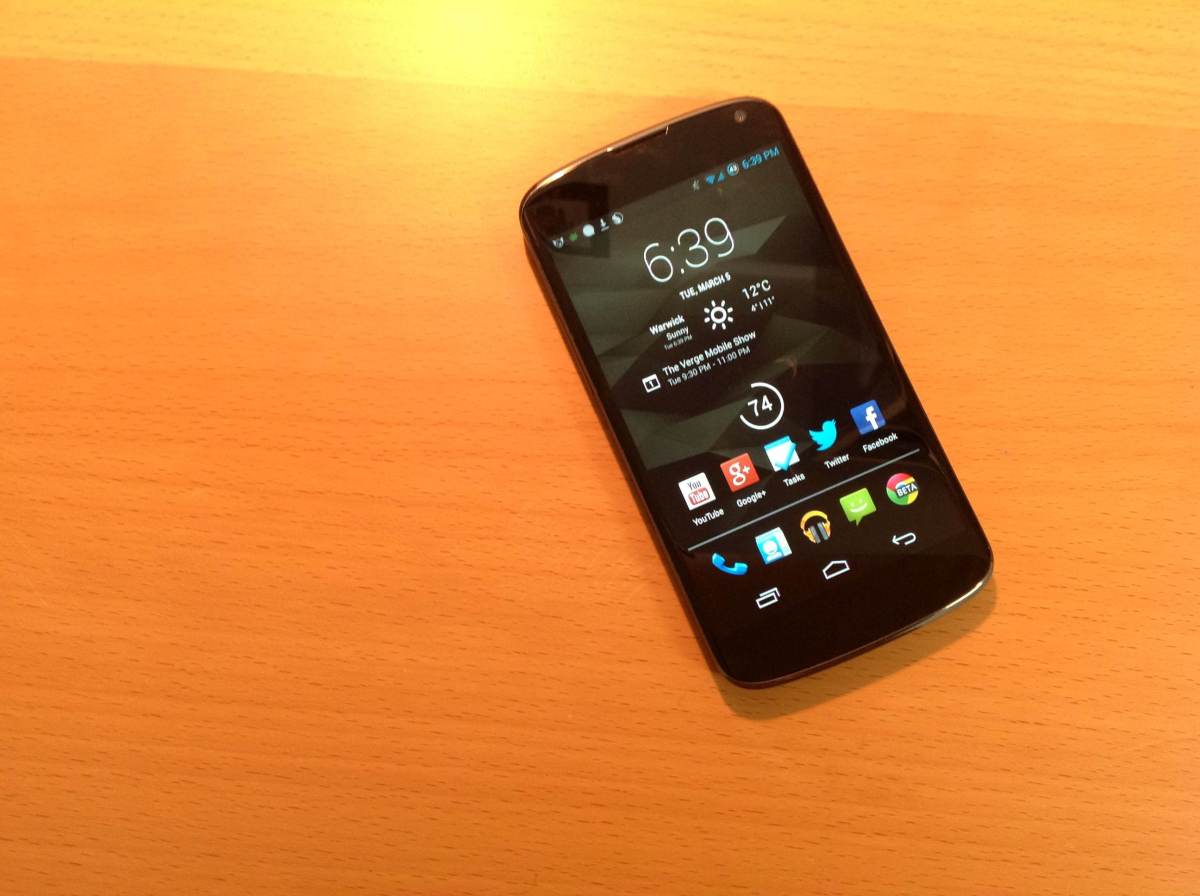
This phone is beautiful. There are no other words to describe it. It is right up there with the iPhone 5 and One X in terms of hardware design and build quality, which is a massive achievement considering the price point. The unadorned glass façade gently curves down to meet the plastic frame which, when flipped over, reveals a gently shimmering micro-etched glass back. Sure, it was a poor design choice in terms of durability, but it looks great. The front is graced with a small speaker grill and a front facing camera. It also features a hidden notification light centred on the bottom bezel – which is very clear and bright. It’s also RGB, meaning it can be programmed to be any colour with apps such as Light Flow. Aside from the volume rocker and power button, the only keys you’ll see here are on-screen, keeping with the pattern started by 2011’s Galaxy Nexus and continued throughout many other post-Ice Cream Sandwich devices and, while not without their critics, I love them. It’s simplicity done extremely well.

Nexus 4 Back

The screen is a 4.7” WXGA (1280 x 768) IPS affair, but some of it is taken up by software buttons. The screen is also up there with the best, using the same in-cell technology the iPhone 5 made a big deal about which, seeing as both panels come from LG, makes perfect sense. The colours and vibrancy are great, although still trail behind AMOLED in certain aspects. The Nexus 4 feels solid in the hand, but also feels very slippery due to the glass back and curve, and I therefore highly recommend getting a case for it, no matter how difficult it is to cover up the beautiful exterior. Another slight problem is the chrome band surrounding the front. While it is done very well, it does have the tendency to scratch or dent. The buttons are made of the same material. They have a nice travel, and feel solid, but they are quite slippery – a recurring theme with the hardware on this phone. However, in spite of all of these flaws, this is easily one of the best designed Android phones ever.

Nexus 4 Base

Inside, the Nexus 4 sits perched upon the top of 2012’s internal hardware. It has a 1.5GHz quad-core Snapdragon S4 Pro with an Adreno 320 GPU, coupled with 2GB of RAM giving you a blazing fast phone, although the upcoming flagships like the HTC One and Galaxy S IV should easily eclipse it. Benchmark scores demonstrate this, although these should be taken with a pinch of salt, as our testing shows that the US variant of the Galaxy S III (with dual-core S4 chip) obtains a higher Quadrant score than the quad-core S4 Pro-powered Nexus 4, suggesting that this benchmark has not been properly optimised for Android 4.2 yet.

Benchmarks

Device Chipset Quadrant AnTuTu NenaMark2
LG Nexus 4 1.5GHz Snapdragon S4 Pro (Quad) 4694 17561 59.6 fps
Samsung Galaxy S III (US) 1.5GHz Snapdragon S4 (Dual) 5325 7373 48.7 fps
HTC One X+ 1.7GHz Tegra 3 (Quad) 7652 13546 57.0 fps
HTC One X (Intl.) 1.5GHz Tegra 3 (Quad) 4602 9795 54.7 fps
Asus Nexus 7 1.3GHz Tegra 3 (Quad) 3734 10426 55.3 fps

Software

This phone is running pure, unadulterated Android and is all the better for it. Untouched by manufactures, this allows the end user to experience and enjoy Android as Google intended, which is of course one of the major selling points of this phone. A positive knock-on effect of this is that it should receive timely updates to Android, currently on version 4.2.2. This is why the Galaxy Nexus remained a great phone throughout it’s lifespan – and why the Nexus 4 will be the same. It’s a safer choice than a Samsung or HTC phone, which may or may not be updated to the latest version of Android.

Nexus 4 Corner

Android 4.2 is the best version of Android yet, and it looks great on the hardware of the Nexus 4. I’m not going to do a full review of the software as it’s still the Jelly Bean that we know and love from I/O 2012, but I’ll go over a few of the new features, such as lock-screen widgets. Combined with the ever-growing number of third party apps that support this functionality, this is amazing. My favourite use case is to see my to do list and edit it all from my lock screen. This is joined by gesture typing (a Swype-esque keyboard), Photo Sphere (StreetView-esque 360 degree panoramas) and Miracast streaming to make the latest point upgrade of the dessert-flavoured OS.
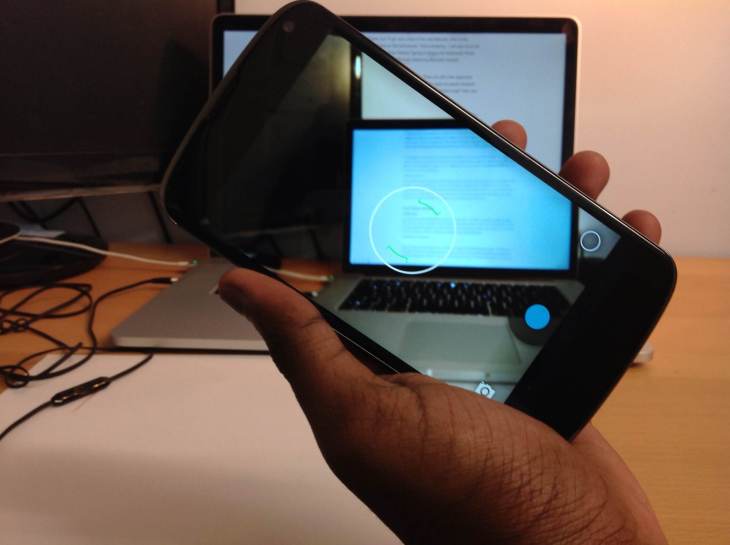
Nexus 4 Camera

What does this all mean to you? Basically, you get a rock solid, lightning fast version of Android. This is easily on par with the iPhone, if not smoother thanks to Project Butter. It also blends in with all the apps that follow the Holo design guidelines (unlike the One X). I realise I must sound like a fanboy when I say this, but honestly it’s true. There are still places where Android lags behind iOS, but those places are few and far between. I’m genuinely excited to see what Android 5.0 will bring.

Camera, Battery and Radios

As many reviews have stated before, and more will state after, the Nexus 4 camera is simply average. Don’t get me wrong, it’s good, but not amazing. I would put it about on par with the iPhone 4S in terms of picture quality, and slightly worse than that for colour reproduction. Rather than telling you, it’s better for me to show you. There is a full gallery of sample shots on the way to be added to this review later.

Nexus 4 Sample Shot Can

Again, the same goes for battery life. It is average, and maybe even slightly below. The Nexus 4 lasts about 10 hours on a charge, but with screen on time fluctuating wildly depending on usage and the ROM. My highest is about 4.5 hours and the lowest is about 1.5 hours. Not great, but with a bit of careful usage here and there it will get you through the day. I’ll also update this review with screenshots of a few charge cycles. I’m not entirely sure why the battery life is so sub-par considering it is a non-LTE phone with a 2100mAh battery, but I assume that the internals or apps are draining it.

The radios in the Nexus have been very good, definitely better than the One X I reviewed last year. WiFi reception has been pretty good, reaching 3 bars out of 4 in my room. This is pretty good for a smartphone as my room has brick walls, and 3G reception has been pretty good too. One major thing that the phone has been bashed for is the lack of 4G LTE capability, but if you are in the UK then that shouldn’t be a problem until much later when 4G is widespread, unless you are an EE customer.

Conclusion

Nexus 4 Conclusion

The Nexus 4 is easily the best phone in its price bracket and, in most ways, it is definitely the best phone on the market. However, is it the phone that you should buy? The HTC One and Samsung Galaxy S IV are both lurking just days away, and I say if you are buying a phone to last 3 or 4 years, this probably isn’t the phone to buy due to the crack-prone glass back and lack of LTE. If you are buying a phone to last 1 year (or even 2), then this is your phone. The promise of prompt Android updates ably aided by the swift internals will keep you ticking by nicely. Sure, in 2 years it might not be the best-specced phone, but it will remain the yardstick for Android in 2013. Why? Because it’s a Nexus, and this is how Android phones should be done.


Samsung Galaxy Note 8.0 revealed early on MWC show floor

Samsung Galaxy Note 8 MWC

We’ve known about its impending arrival for a while, but only now has an Engadget tipster shown us what Samsung’s latest Galaxy Note form factor will look like. Following on from both of the phablets and the 10.1″ slate we saw at MWC a year ago, the new 8″ tablet appears to aim squarely (or rectangularly) at the Nexus 7 and other small slates, and, unsurprisingly given its Galaxy Note nomenclature, there’s an S Pen involved. The design language appears to closely follow that of the Galaxy S III and Note II, and we should get to see more of the device, set to be the main inspiration for the upcoming Galaxy S IV, at MWC in Barcelona this week.

Source Engadget

HTC One launch event liveblog: catch up on all the news now!

HTC One

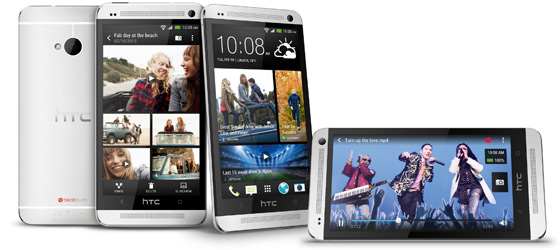
HTC is due to show off its latest creation today, and there’s not much about the One (formerly known as M7) that we don’t already know. It looks like a hybrid mutation of a BlackBerry Z10, iPhone 5 and Sony Xperia P, and HTC’s maligned Sense skin seems more reminiscent of Windows Phone with its latest iteration. Hell, we even know that HTC’s going crazy with the button placements on the new phone, but that doesn’t mean that the Taiwanese firm won’t have a few surprises up its sleeves, so we will be liveblogging the launch proceedings via an interesting new platform (Google Docs) and myself (if I get home in time), Rowan and possibly Neil will be bringing you all the news as it happens. Will HTC’s latest be the One to make you feel that way? Join us in a few minutes to find out!

All times are in GMT
This event has now ended.

15:04 Looks like the event is about to start soon! There appears to be a very WP8-esque animation on the stage projection.

15:06 This phone has been leaked like crazy. It looks a bit like a cross between the iPhone 5, the Z10 and the Droid DNA. The highlight has to have been a slightly (read: very) drunk Peter Chou shouting HTC ONE! repeatedly to a crowd of HTC employees a bit like Ballmer.

15:09 The music is ramping up. Very electronic-y.

15:14 Is this thing on? Hey world.
Hey!

15:15 Unlike The Verge, our liveblog isn’t sponsored by BlackBerry. Prepare for total impartiality/terrible jokes/analysis.

15:17 The London event is causing tremendous delays. We should be under way shortly.

15:17: Apparently, there are a lot of unofficial hands-ons going on while people are waiting. It looks like a lot of HTC employees already have their Ones.

15:18: And Jason MacKenzie is on stage in New York!

15:19: “HTC saw a massive opportunity to bring new excitement back to the smartphone.” – Jason MacKenzie

15:20: The HTC One!

15:21 HTC jumping straight into things. Here is a picture of the familiar guy.

15:22 Dual stereo speakers and dual capacitive buttons with the odd placement that HTC seems to wish to pioneer.

15:23 “The new Sense brings a clean and modern design”

15:23 New “Blink Feed” feature, replacing apps and widgets with information that is important to you. Partnering up with a lot of people apparently.

15:24 BlinkFeed seems to be built-in Flipboard. It’s even a bit like Flipboard’s tablet app with its tiled UI.

15:25 HTC has 1,400 content partners. Wow.

15:26 The Verge just broke their embargo. Dual speakers on the front are known as “BoomSound”. Oh dear, HTC.

15:26 Ed Erhart from ESPN is on stage talking about how sports fans love their content on their phones etc.

15:26 The London event is finally beginning.

15:27 The processor is a quad-core 1.7GHz Snapdragon 600, and the camera is the rumoured 4.3MP UltraPixel thing that works somehow. Also Sense 5.

15:27: A clearer image from Engadget! They describe the phone as very thin, and very well made.

15:28 It appears to be a good UI for people who love new content in their faces. If you can avoid it being bloated by Facebook and Twitter, I think I’d adapt to it.

15:30 Also, it’s a 4.7” 1080p display at 468ppi. If you like pixels, this phone is for you.
“Neil Thomas, Pixel Density Enthusiast”

15:32 People at the event are saying the screen is incredibly bright. We believe it is Super LCD 3.

15:32 Also the BOOMSOUND is LOUD. LOUDER THAN BOOM.

15:33 Press shot!

15:33 HTC’s new music player pulls in lyrics from the internet (think Shazam’s LiveLyrics) and it has 2 microphones to record better audio.

15:34 It also has an IR blaster, if anyone cares. Also 802.11ac.

15:35 It will be on all UK networks (duh) and Sprint, T-Mobile and AT&T. Verizon will probably get DROID plastered all over it with dumb bloatware.

15:36 2GB RAM, 32GB storage (with 64GB SKU in some regions), GLONASS, Bluetooth 4.0 and…………..2300mAh battery. Don’t forget GLONASS.

15:37 Apparently good low light too – could this be a PureView killer?

15:38 “We’ve developed our own technology, called the UltraPixel camera. 300 percent more light, ghostless HDR, HDR video.”

15:39 There’s also a camera feature called HTC Zoe. Zoes are short video clips (think Vines).

15:40 It will be interesting to see how well this stacks up with the Galaxy S4 that is rumored for March 14th.
Of course we will be liveblogging that too. And the PlayStation thing tomorrow.

15:41 Your Zoes can have Instagram-esque filters! The world is saved!

15:42 Here are a few quotes from the Engadget hands-on.
“Look a little closer and the attention to detail is staggering — this is a product that stands shoulder to shoulder with the iPhone 5 in terms of materials and build quality.”
“HTC even sourced custom-grade aluminum that’s harder than what’s found on the iPhone 5.”
“In front are two aluminum bands (top and bottom) separated by a vast sheet of Gorilla Glass 2 covering a gorgeous 4.7-inch 1080p (468 dpi) Super LCD 3 display.”

Apparently it takes 200 minutes to machine just one shell.

15:44 “We’ve leveraged our breakthroughs in technology to integrate the antenna within the phone’s aluminum, allowing us to create gapless devices from a single block of aluminum.”

15:46 IT HAS CHAMFERED EDGES.

15:46 It also has Optical Image Stabilization, Nokia style.

15:47 The One will ship worldwide in late March. No RIM-style same-day launch magic here. 😦 Also no Verizon. So yay, no home button logos.

15:47 “HTC is launching a new trade in program where customers that preorder can turn in their current phone to get up to $100 off of a One.” I could actually do this – but I love my Nexus.

15:48 And, as with last year’s 8X event, HTC’s done in an hour. Thanks for joining us! Remember to give us feedback on this new liveblogging style we’re trying.

15:49 Be sure to join us at 4 PM GMT for the Ubuntu event! Also, join us at [placeholder o’clock] tomorrow as we meet the future of PlayStation!

Mozilla shows off developer phones for Firefox OS

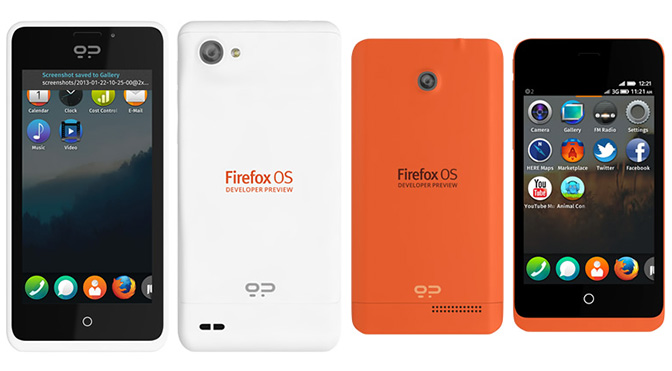
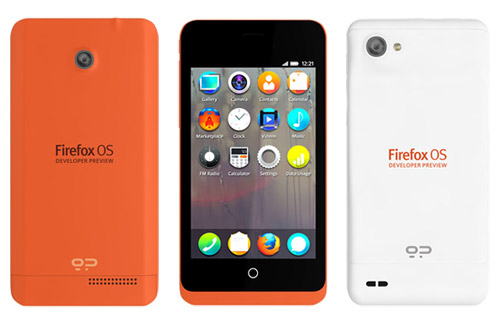
firefoxphone Mozilla has just announced that they’ve got two “Developer Preview Phones” in the works which will run on their own Firefox OS. Both are made by relatively unknown Spanish company Geeksphone. The orange phone above is known as the Keon, and has 3.5-inch touchscreen and has a 3-megapixel camera on the back. It comes with 512MB of RAM and 4GB of internal storage, and runs one of Qualcomm’s 1Ghz Snapdragon CPUs. The white model is called the Peak, and has higher specs than the Keon, with a 4.3-inch screen, 1.2Ghz dual-core Snapdragon S4 CPU and an 8-megapixel camera, though it has the same storage and RAM. It runs on a 1800mAh battery, slightly larger than the Keon’s 1580mAh cell.

Mozilla didn’t mention anything to do with price or  a specific release date, but Digixav understands that the Keon will start shipping next month.

These handsets clearly aren’t going to set the world alight, and it seems as though Firefox might be targeting developing markets with cheaper smartphones. Software-wise, from a purely visual perspective the home screen looks very similar to the iOS one, simply with circular icons instead of Apple’s square ones. We have to say that it is a big disappointment that Mozilla couldn’t have found a fresh or innovative design rather than slightly altering one which is five years old.

Firefox OS works very differently to current mobile operating systems. The processors might seem tiny compared to the quad-core beasts powering the latest phones, but Mozilla have tried to make it so the phones don’t need huge processors to run smoothly. The big thing that sets it apart from rivals, however, is that Firefox OS doesn’t do native apps. What might look like native apps on the phone are actually website bookmarks. This means it can all be written in HTML5, which could be a big boost for some developers. This is a certainly a huge step Mozilla have taken, and it will be interesting to see how the consumer market responds. Mozilla reckons that we’re not doing apps right at present, and we could lose the wonderful open web we currently take for granted.

Here at Digixav we’ll certainly be watching closely to see whether Firefox OS can make a significant impact on the smartphone audience. With an Ubuntu mobile operating system on the way, it will be very interesting to see whether this new breed of open source software can have the desired impact on the iOS and Android dominated market.

Via Wired

Japanese carrier NTT DoCoMo announces Pro version of LG Optimus G with 5″ 1080p display

LG Optimus G Pro NTT DoCoMo

In unveiling its DoCoMo NEXT line of smartphones and tablets for 2013, Japanese carrier NTT DoCoMo has confirmed the impending release of an enlarged version of the LG Optimus G, the phone that served as the basis for the Nexus 4. The Optimus G Pro trades a 4.7″ 1280 x 720 panel for one of 1920 x 1080 over 5 inches, but that appears to be the only major difference, as both Pro and ‘Amateur’ models feature quad-core Qualcomm Snapdragon S4 Pro chips powering a skinned version of Android 4.1. The 3000mAh battery is the largest in DoCoMo’s new smartphone line, and a 13.2MP BSI CMOS sensor can be found on the rear. Along with the usual array of Japan-specific features such as One-Seg TV broadcasting, the Optimus G Pro will also support LTE, NFC and WiFi tethering for up to 8 devices, while a microSD slot will allow for up to 64GB of expansion. The phone is said to be hitting NTT DoCoMo in April although, as with the Sony Xperia Tablet Z, it remains unlikely that this phone will ever be seen beyond Japanese shores.

NTT DoCoMo 2013 Spring Collection

Via Android Police
Source NTT DoCoMo

Sony announces Xperia Tablet Z as the world’s thinnest and lightest tablet

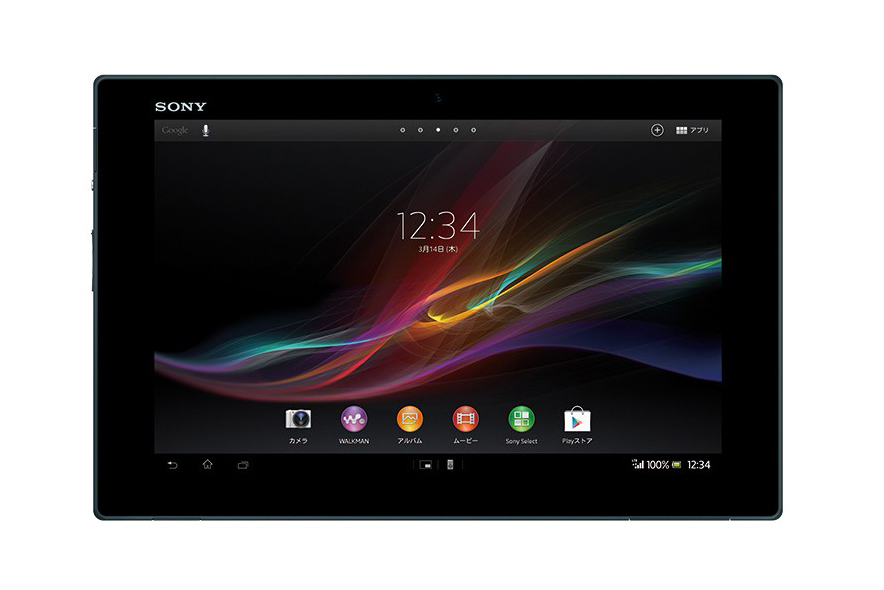
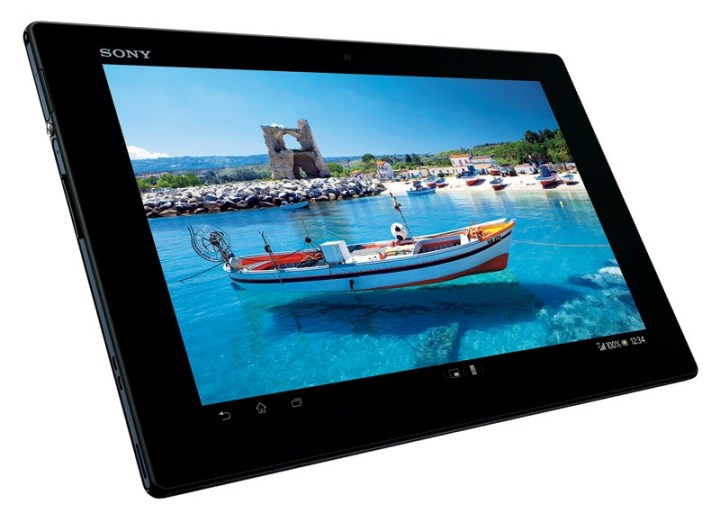
Sony-Launches-Xperia-Tablet-Z-Tablet-with-Android-4-1-Jelly-Bean-5 Today Sony announced the successor to their Xperia Tablet Z, a 10.1 inch machine running Android 4.1 and boasting some impressive specs. Design-wise Sony seem to have finally conceded defeat with the rolled-over magazine look that plagued their last couple of tablets being mercifully killed off. While it wasn’t as pronounced on the Xperia Tablet S as on its predecessor the Tablet S, which won our award for worst design back in 2011, we still feel that it drew away from the whole design. This time round Sony have given their new tablet a similar look to its upcoming smartphone sibling, the Xperia Z, and have come up with a classy, minimalist design which has been met with approval throughout the Digixav office.*

At a staggering 6.9mm thick, the Xperia Tablet Z is thinner than the iPad mini, and is the lightest 10-inch tablet in the world, weighing in at just under half a kilo. Like the Xperia Z, Sony says that the Xperia Tablet Z is waterproof for half an hour, up to a depth of one metre, and dustproof too. We only hope that these claims don’t prove to be as unfounded as those of the Xperia Tablet S.

xperia-tablet-z-1358733859Software is where this tablet really excels. The screen is 1920 x 1200, significantly better than the 1280 x 800 of the last Xperia tablet incarnation, and should rival the stunning display on the Apple’s 4th generation iPad. It packs Qualcomm’s 1.5GHz quad-core Snapdragon S4 Pro chip, and comes with 2GB of RAM and 32GB of internal storage. It’s quite likely that, as with the Xperia Tablet S, we will see Xperia Tablet Z SKUs with varying amounts of onboard storage at varying prices although, unlike the Nexus 10, there is a microSD slot for those who want a little extra storage. The tablet comes with a solid 8.1 megapixel camera on the back, but no details have been released for the front-facing camera yet. The 6000mAh battery isn’t anything to get too excited about, but it will suffice. It also has LTE and NFC support.
No details to do with price have been released, but with those figures we’re looking at £400+. We have no idea how they managed to fit all of those specs into a 6.9mm 495g slab. It’s interesting that the Xperia Tablet Z wasn’t announced along with its smartphone cousin at CES, but we’re sure that Sony have their reasons. No release date has been announced either, but we can presume that it will come out around the same time as the Xperia Z, sometime this first quarter. We’d have also thought that Sony might have wanted to wait for the imminent release of Android Key Lime Pie to release the Xperia Z family, what with the state of Android updates. All in all though, this will surely be the best 10 inch Android tablet on the market when it comes out, and will be the tablet to beat for Sony’s rivals.

*Only joking. We can’t afford an office at Digixav.

Via Engadget
Source Sony

App of the week: Mass Effect: Infiltrator

Mass Effect Infiltrator

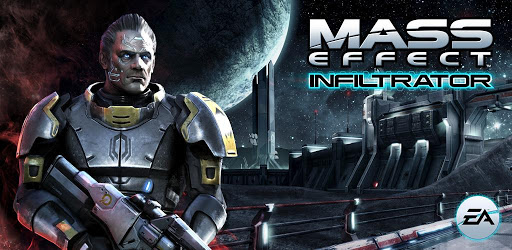
This week’s app of the week is Mass Effect: Infiltrator by EA, published for mobile platforms as a spin-off from the wildly successful game series. Set in the same universe and time period as the console games, you follow the story of Cerberus agent Randall Enzo, a veteran agent who ‘procures aliens for illicit experiments at a secret facility’. During the course of the game, Randall goes rogue and vows to take down Cerberus. You do this through an arsenal of weapons and biotic powers which, depending on how you use them, give you a number of different ways to kill the enemies which have you completely outnumbered. Each set of enemies you take down, depending on how and how fast you kill them, will earn you credits to spend on things such as armour and weapon upgrades for your character.

on_a_mad_style_ting_like_murder_yeah

The controls of the game are fairly simple and are well explained at the beginning of the game. There is a massive contrast between combat and non combat controls, with the latter being fairly slow and relaxed while the other enables you to play lightning fast, taking down multiple enemies in rapid succession. Switching between weapons to get more style points for your kills and choosing which biotic powers to use is as simple as dragging in from the top corners of the screen, something which after a while of playing becomes almost automatic.

Overall this is a fantastic game which I would recommend to both fans of the Mass Effect series and just about anyone else who enjoys shooter games with a great storyline.

Mass Effect Infiltrator, Android (£3.71) and iOS (69p)
Download it from Google Play and the App Store

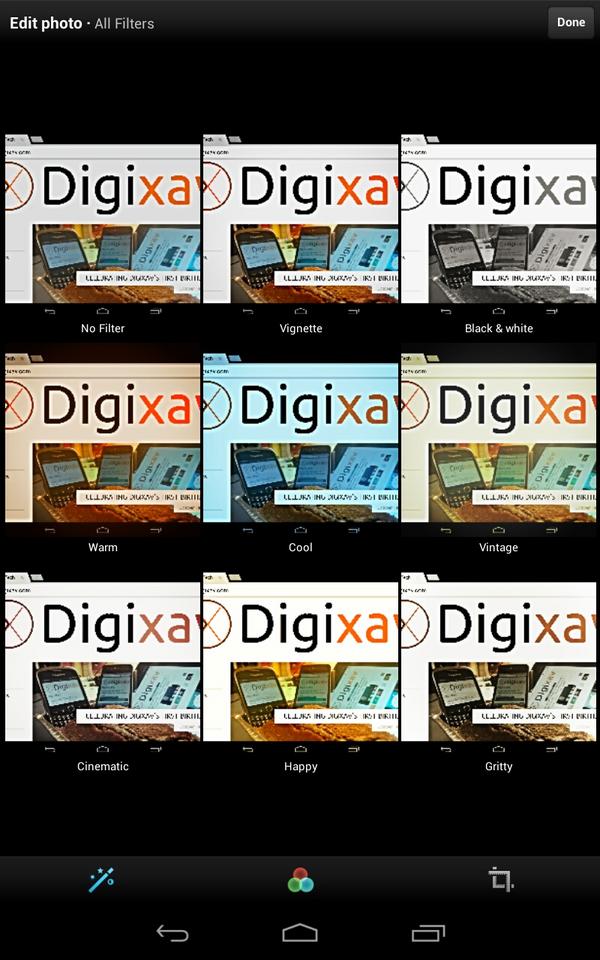
Twitter introduces photo filters into its iOS and Android apps

[tweet https://twitter.com/Xavdog/status/278284300485541888]

After Facebook-owned Instagram removed its integration with the social network last week, Twitter has released an oft-rumoured update to its Android and iOS applications that add photo editing and filters without the need for third-party services or applications. Powered by Aviary, a photo editing platform which provides an SDK that is already implemented in a number of third party applications, the new app provides eight filters that were designed specifically for Twitter along with basic cropping and enhancement options. While unlikely to tempt many users away from Instagram, which also added a new filter today, frequent users of Twitter’s own mobile apps may be pleased to see them gaining more features to challenge third-party clients. The updates are available now through Google Play and the App Store, but no information has been offered up regarding the filters debuting on other platforms.

Twitter Filters

[youtube http://www.youtube.com/watch?&v=2giNzaZunqE]

Source Twitter Blog

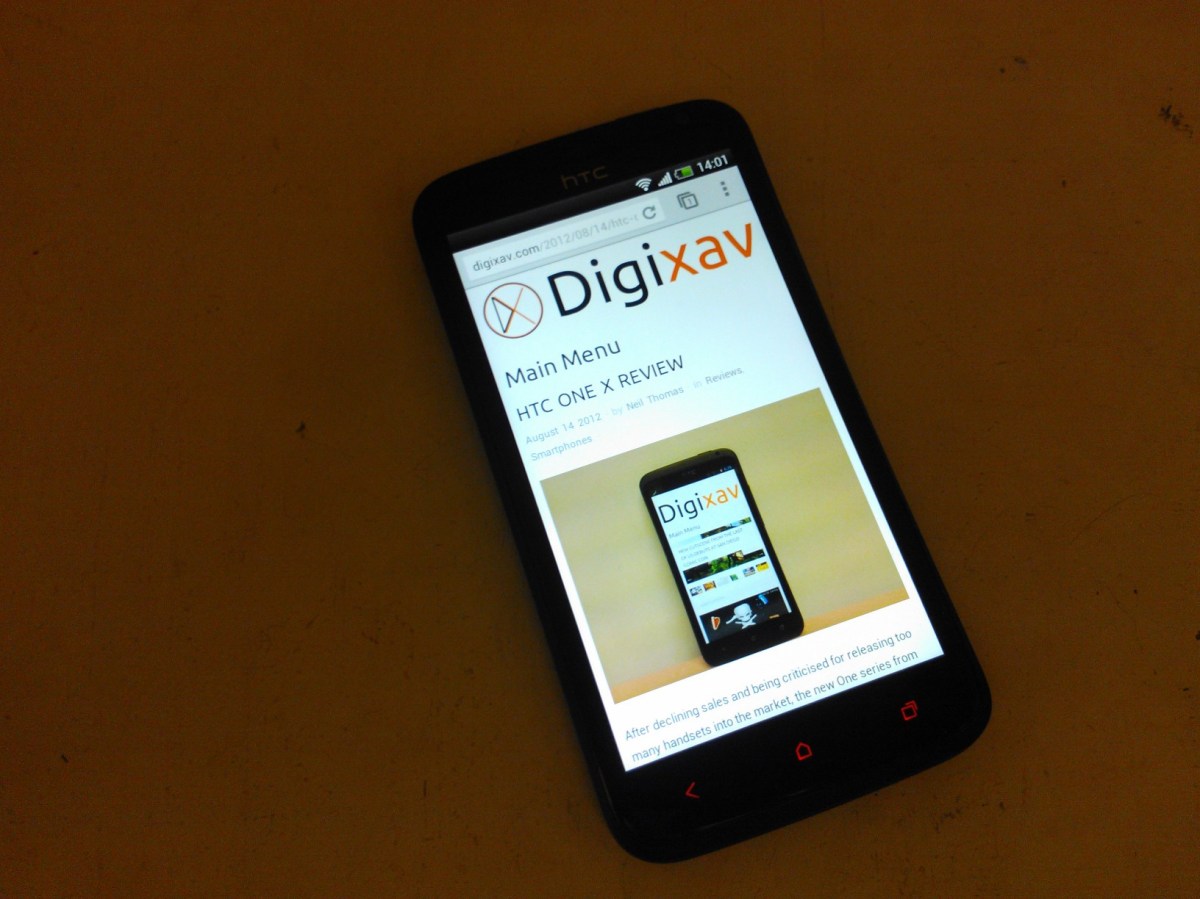
HTC One X+ review

When HTC unveiled the One family at MWC earlier this year, the simplified line-up was meant to represent a new beginning for the Taiwanese firm. One range of phones for the entire world was supposed to be the result of a shift of focus from quantity to quality, and overall they impressed us. When we reviewed the One X back in August, we concluded that it was a stunning phone and confidently pointed towards a bright future for HTC. Sense aside, HTC could be in a position to become market leaders. But then things changed.

Surrendering to the wills of various carrier partners, mostly in the United States, HTC’s production lines began to churn out even more devices. Since that impressive MWC launch in February, no fewer than 10 Android devices have been launched by the company in various parts of the world, many of which did not bear the One family name. The most recent of these – and the company’s new European Android flagship – is the One X+ which, at first glance, looks no different to the original One X. How does it fare against its latest rivals, and, with new devices just around the corner at CES and MWC after the turn of the new year, is it worth your money? Read on to find out.

Continue reading →

Samsung Nexus 10 quick start guide obtained by Korean site

As rumours circulate that Google is set to expand the Nexus family of Android devices at an event on Monday, Korean site Seeko has obtained images of a supposed Samsung Nexus 10 product guide. While sparse on details, the images show a diagram of the device including a Micro-HDMI port and front and rear cameras. It is also rumoured to have a 2560 x 1600 10.1″ display paired with Android 4.2, although the manual cannot corroborate this. With the Nexus 4, 7 and 10, Google’s new naming strategy is very clear, and on Monday we should get to see the clearer picture.

Via The Verge
Source Seeko