Windows 8 not such a flop after all, selling at similar rate to Windows 7

Listen to certain sections of the media and you would be led to believe that Windows 8 has been a massive failure for Microsoft, on the levels of Vista. However, the figures Microsoft have just released tell quite a different story.

It took 183 days for Windows 7 to reach the 100 million licenses mark. Windows 8 has just hit the same milestone. How long did it take? 192 days. That’s just 9 days long than its predecessor, so it is selling at a very similar rate. This shows that consumers are willing to take plunge with Microsoft’s latest operating system, despite there being bigger changes to it than there have been since the last century, and despite certain outlets around the web suggesting that there are many issues still with it and that consumers are responding badly to new style.

Yes, Windows 8 needs some work to bring it up to the standards we expect from Microsoft, but it is a step in the right direction, and hopefully with the now confirmed Blue update we will see a much smoother and more coherent feel to the OS with both the familiar desktop and the brand new start screen.

Microsoft has also released some more figures relating to Windows 8:

  • There are now 700 million Microsoft accounts
  • There are 400 million active Outlook.com accounts
  • There are 250 million active SkyDrive users
  • There have been 250 million Windows Store downloads

Via Windows Phone Central

Microsoft Surface RT review

IMG_20130124_212237

Last June, a mysterious event invite came out of Microsoft’s Washington HQ. Unlike pretty much every other tech launch in the last two years, we hadn’t seen any major leaks beforehand, although rumours of the launch being for a tablet with Windows 8 (or, according to Mat Honan, a #MSFTaaaaaablet). What the company ultimately unveiled was the Surface, its first piece of Windows-based hardware, in both RT and Pro flavours, the latter of which still hasn’t made it to the UK. In a brave experiment, I have spent the last couple of months using the RT model as my primary computer, and it’s definitely been turning heads. Has this been for good reasons, though? Read on to find out. Continue reading →

Google Play Store v4.0 for Android leaks, bringing italicised text to Holo

Google Play 4.0

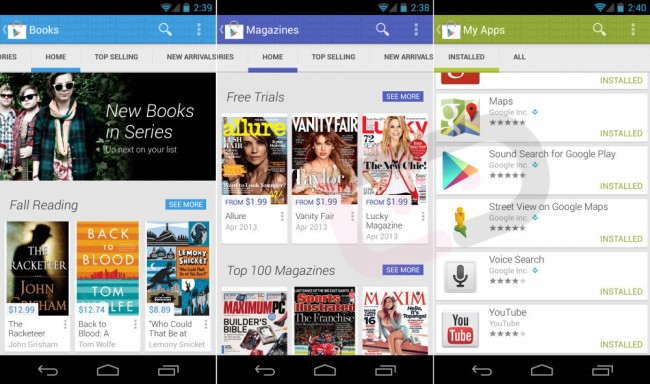
Kellex over at Droid-Life has obtained what is purported to be build 4.0.16 of the Google Play Store for Android, and this gives us our best hint yet of how Matias Duarte and company are planning to take Android’s design with the expected release of Android 5.0, codenamed Key Lime Pie, at Google I/O. In the 6 minute video below, Kellex shows off the functional parts of the new store (with many pages such as the home page not yet working with the new design) but what is evident is that the new version of the Holo design language is set to be a lot lighter and colourful than the black and blue introduced with Ice Cream Sandwich in October 2011, with italicised Roboto Light being used in headings for the first time. Contrary to Google Keep, a note-taking service that the company officially launched today with an overdose of yellow, responses to the new look seem overwhelmingly positive, and we will wait with baited breath to see what further UI overhauls Google may announce for Android, now under the reigns of Chrome and Apps head Sundar Pichai, at I/O in May.

Source Droid-Life

First Xbox Live game for both Windows Phone and Windows 8 quietly released

galactic_reign2When Windows Phone 8 was released way back in October last year, much was made of the relationship prospective Windows Phone 8 purchasers would have between their mobile and their PCs. Since then, nothing much to that side of things has materialised, but yesterday that all changed.

Galactic Reign was teased by Microsoft last October, but there was no mention of platforms, nor was there a release date, but yesterday the game quietly slipped into both the Windows 8 Store and the Windows Phone Store as an Xbox Live title. Microsoft used to always announce upcoming Windows Phone games well in advance, but they haven’t done so much of that recently, and it seems crazy that such a huge milestone for the OS was released with so little fanfare, but hey, at least it’s here now.

galactic_reign3As you might have guessed from its name, the game is a sci-fi strategy number. You have to find the right balance between spaceships and weapons and hope your fleet is good enough to beat your opponents, and we won’t go into too much detail here, but there’s a single player mode with 60 challenges and a multiplayer side of things where you battle people online. There a bunch of Xbox achievements to aim for as well.

It’s great to finally see a game which bridges the Windows Phone 8/ Windows 8 divide. With the multiplayer game, you can play with different hardware to your opponent, i.e. it doesn’t matter whether you use a PC, Windows Phone or Surface. Galactic reign will cost $4.99 for Windows 8 or for Windows Phone 7 and 8. The best bit of all? You only need to purchase one version to have access to it on both platforms.

Source: Windows Phone Central

Samsung Galaxy Note 8.0 revealed early on MWC show floor

Samsung Galaxy Note 8 MWC

We’ve known about its impending arrival for a while, but only now has an Engadget tipster shown us what Samsung’s latest Galaxy Note form factor will look like. Following on from both of the phablets and the 10.1″ slate we saw at MWC a year ago, the new 8″ tablet appears to aim squarely (or rectangularly) at the Nexus 7 and other small slates, and, unsurprisingly given its Galaxy Note nomenclature, there’s an S Pen involved. The design language appears to closely follow that of the Galaxy S III and Note II, and we should get to see more of the device, set to be the main inspiration for the upcoming Galaxy S IV, at MWC in Barcelona this week.

Source Engadget

Microsoft finally announces release date and pricing for Surface Pro

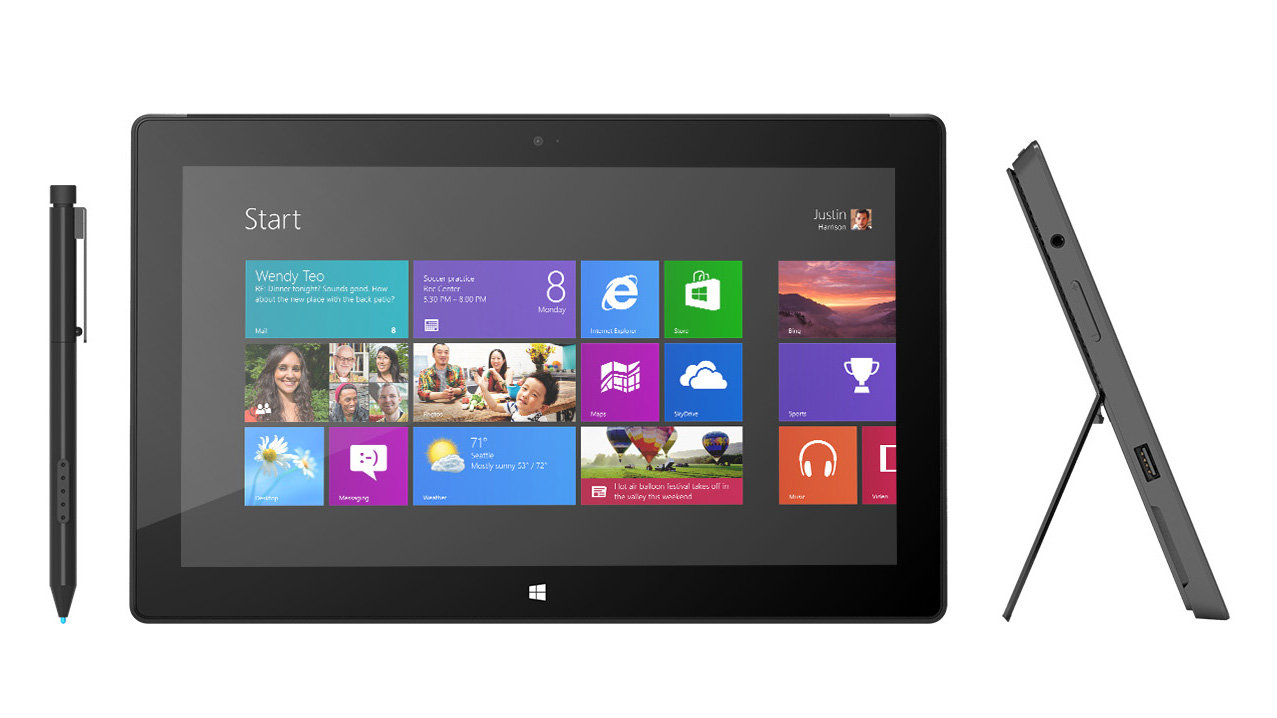
Surface-Pro-with-penThe Surface Pro, the big brother to Microsoft’s Surface RT which was released in October last year, won’t go on sale in January as originally planned, but you will be able to have one in your hands by February 9th. On the bright side, Microsoft do seem to have admitted defeat with their Surface RT retail strategy, which was so bad that it was nominated for our biggest failure award – the Seattle-based company says that the Surface Pro will have wide retail availability beyond just Microsoft.com and Microsoft Stores.

We knew that Microsoft were targeting the high-end market with the Surface Pro, but even so the prices they’ve announced do seem extortionate. The minimum you’ll find yourself paying for one is $899, for the 64GB version with no covers included. The 128GB model will add $100 on to that price. The Surface RT 32GB tablet, the cheapest member of the Surface family you’ll find, would set you back $499, so there is obviously a significant difference between the RT and the Pro. Like with the its little brother, if you want to buy a keyboard cover for your Surface Pro it will cost $119 for the Touch Cover or $129 for the Type one. Microsoft will throw in a free pressure-sensitive pen in the box too.

On the same date as the Surface Pro is released, Microsoft have announced that a standalone 64GB will be made available for $599 – previously you could only buy it as a package with the black Touch Cover for $699.

It’s nice to finally get some genuine information on the Surface Pro, but we really feel that the large price tag will put a lot of potential consumers off buying one. Mind you, Microsoft do seem to be aiming here to make something which will completely replace your laptop or desktop PC, whereas previous tablets have only really been able to be used in conjunction with another device, to do all the ‘serious’ stuff on. The Surface Pro will certainly be an interesting one to watch, but personally we can’t see it taking off.

Via Engadget

Sony announces Xperia Tablet Z as the world’s thinnest and lightest tablet

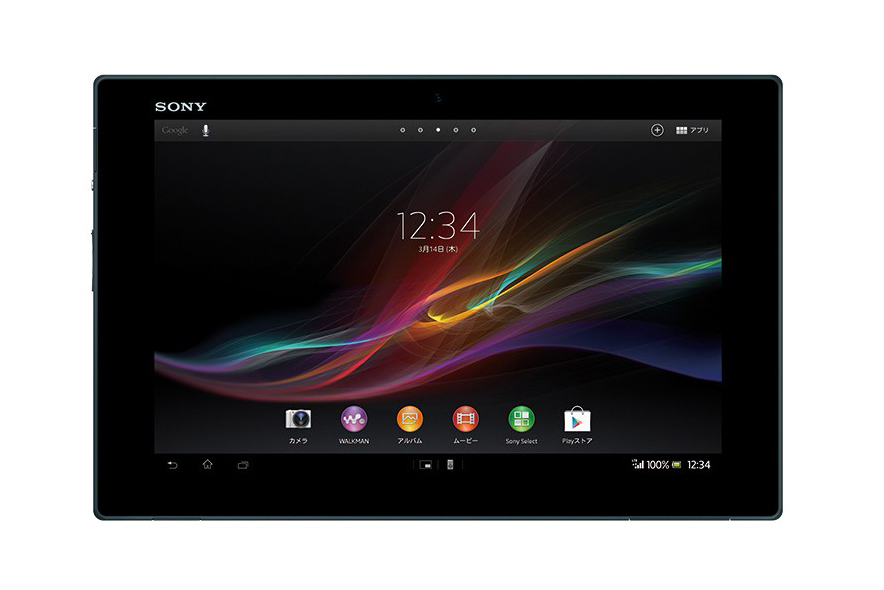
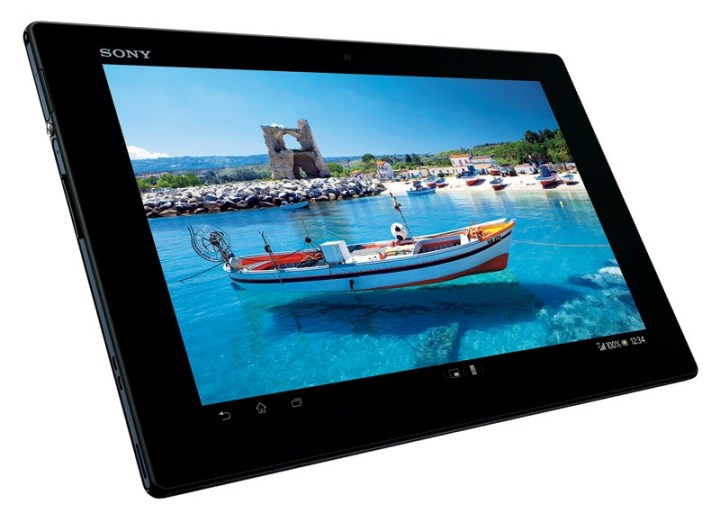
Sony-Launches-Xperia-Tablet-Z-Tablet-with-Android-4-1-Jelly-Bean-5 Today Sony announced the successor to their Xperia Tablet Z, a 10.1 inch machine running Android 4.1 and boasting some impressive specs. Design-wise Sony seem to have finally conceded defeat with the rolled-over magazine look that plagued their last couple of tablets being mercifully killed off. While it wasn’t as pronounced on the Xperia Tablet S as on its predecessor the Tablet S, which won our award for worst design back in 2011, we still feel that it drew away from the whole design. This time round Sony have given their new tablet a similar look to its upcoming smartphone sibling, the Xperia Z, and have come up with a classy, minimalist design which has been met with approval throughout the Digixav office.*

At a staggering 6.9mm thick, the Xperia Tablet Z is thinner than the iPad mini, and is the lightest 10-inch tablet in the world, weighing in at just under half a kilo. Like the Xperia Z, Sony says that the Xperia Tablet Z is waterproof for half an hour, up to a depth of one metre, and dustproof too. We only hope that these claims don’t prove to be as unfounded as those of the Xperia Tablet S.

xperia-tablet-z-1358733859Software is where this tablet really excels. The screen is 1920 x 1200, significantly better than the 1280 x 800 of the last Xperia tablet incarnation, and should rival the stunning display on the Apple’s 4th generation iPad. It packs Qualcomm’s 1.5GHz quad-core Snapdragon S4 Pro chip, and comes with 2GB of RAM and 32GB of internal storage. It’s quite likely that, as with the Xperia Tablet S, we will see Xperia Tablet Z SKUs with varying amounts of onboard storage at varying prices although, unlike the Nexus 10, there is a microSD slot for those who want a little extra storage. The tablet comes with a solid 8.1 megapixel camera on the back, but no details have been released for the front-facing camera yet. The 6000mAh battery isn’t anything to get too excited about, but it will suffice. It also has LTE and NFC support.
No details to do with price have been released, but with those figures we’re looking at £400+. We have no idea how they managed to fit all of those specs into a 6.9mm 495g slab. It’s interesting that the Xperia Tablet Z wasn’t announced along with its smartphone cousin at CES, but we’re sure that Sony have their reasons. No release date has been announced either, but we can presume that it will come out around the same time as the Xperia Z, sometime this first quarter. We’d have also thought that Sony might have wanted to wait for the imminent release of Android Key Lime Pie to release the Xperia Z family, what with the state of Android updates. All in all though, this will surely be the best 10 inch Android tablet on the market when it comes out, and will be the tablet to beat for Sony’s rivals.

*Only joking. We can’t afford an office at Digixav.

Via Engadget
Source Sony

Nvidia unveils Tegra 4 chip and Project Shield handheld console at CES conference

Screen Shot 2013-01-07 at 12.49.13

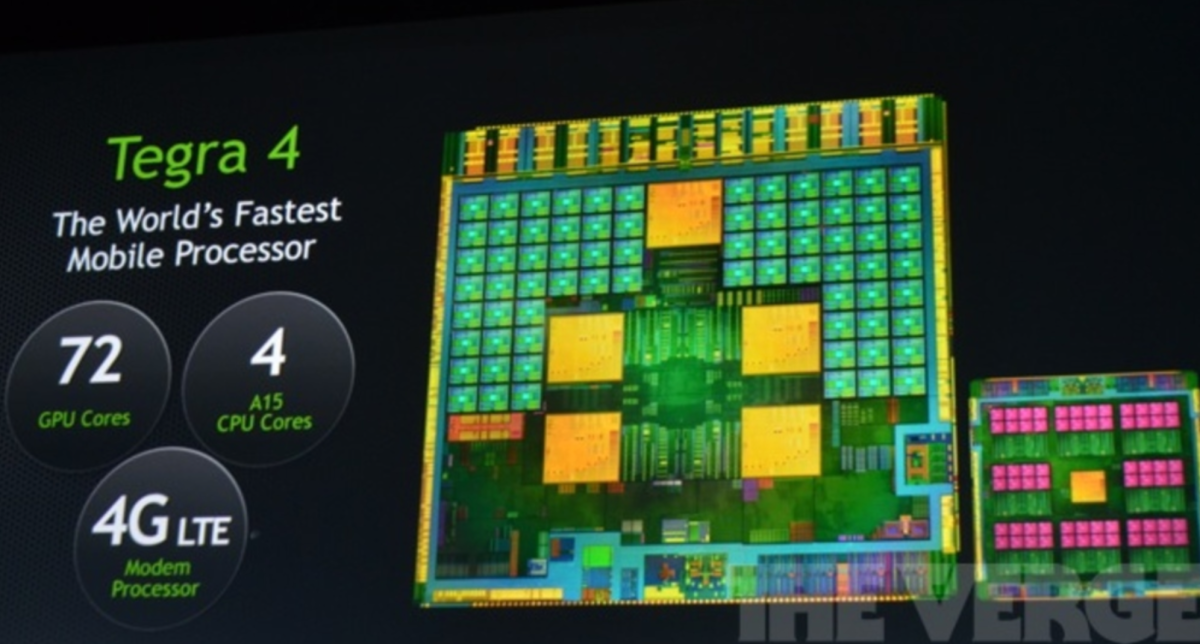
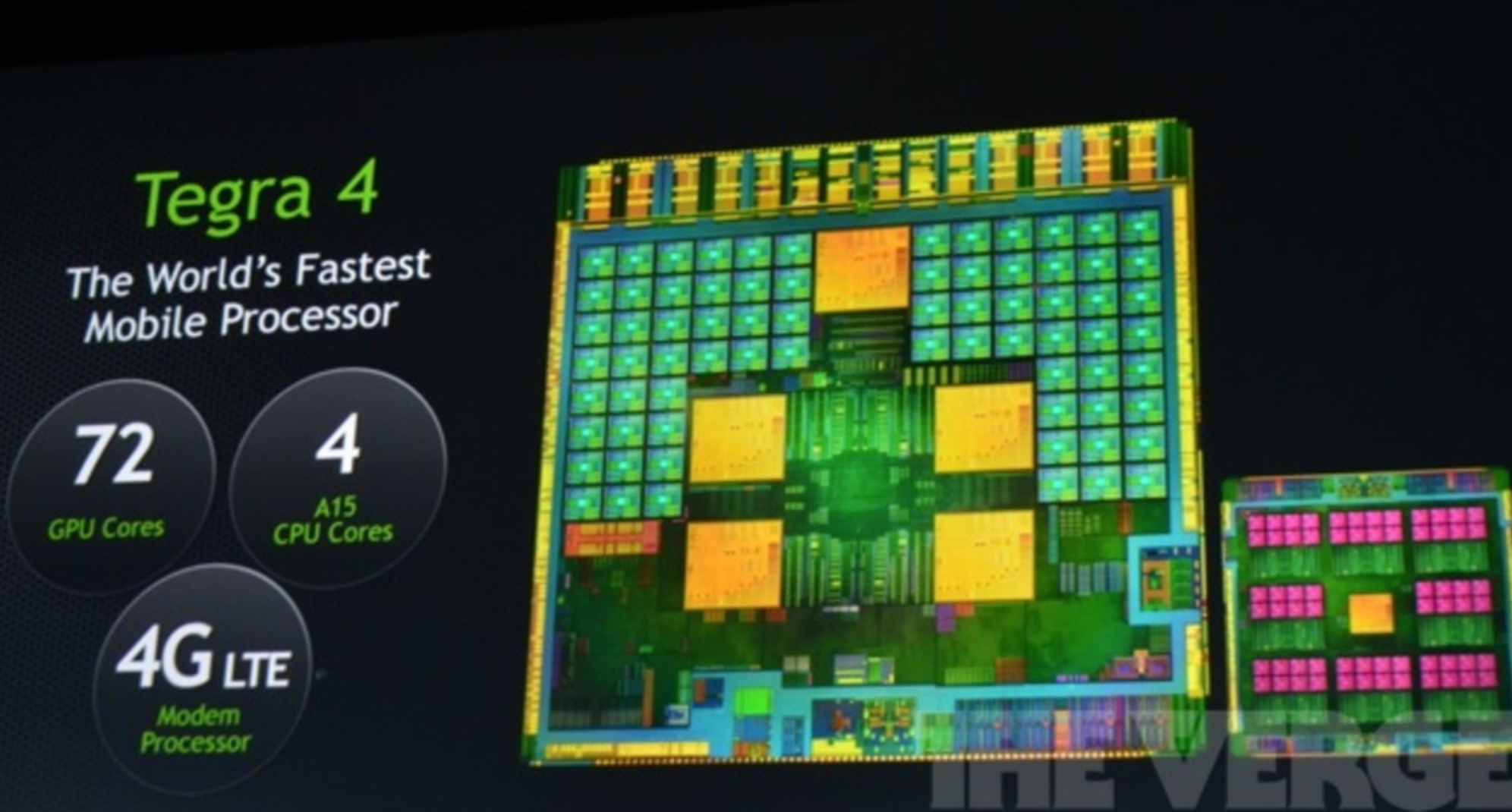
It’s the first day of CES proper today, and the news has started to flood in. Nvidia held an interesting press conference today to announce a few things. There’s no doubt that the most anticipated (and most important) announcement of the day was the Tegra 4 – Nvidia’s new flagship chip to ‘rule them all’. That is until Qualcomm and Samsung show off their work. The new chip packs 72 GPU CUDA cores, and is produced on a 28nm manufacturing process which is a step up from the 40nm of the Tegra 3. This means that even though the chip packs more power, it’ll take less of a hit on the battery life. It uses a new quad core, Cortex-A15 based architecture as well. One notable omission is the lack of integrated LTE – while it does ship with an external modem, that both takes a hit on battery life and reduces space inside of the phone. It’s interesting to see whether this impacts Tegra 4 adoption, as many phones which used a Tegra processor internationally had to use a Qualcomm processor in the US so as to keep LTE.

Screen Shot 2013-01-07 at 12.44.14

The other thing that Nvidia announced was a new handheld gaming system called Project Shield. This came to me as a surprise, but its very very interesting. It features a 5″ 720p display, a Tegra 4 chip and an Xbox-esque controller portion. It is running stock android (i.e good) and has the ability to stream games from your Steam library from your computer to the device, where you can play them. It’ll be interesting to see whether this catches on or flops when it becomes available in Q2 2013

TIM opens 4G LTE network in 4 Italian cities

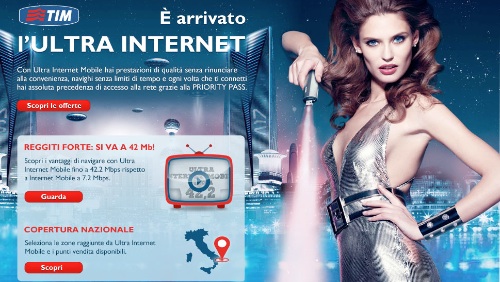
Yet another carrier can be added to the list of those bearing LTE compatibility as the Italian carrier TIM has flipped the switch on its new “Ultra Internet 4G/LTE” network. It debuts in Milan, Rome, Turin and Naples and is set to reach a further 20 cities by the end of the year, with half the Italian population in LTE areas by the end of 2014.

Currently the network is limited to LTE modems and tablets, and €35 gets you a very respectable 20GB per month in both tariff and contract form. Available at €349 upfront is also an LTE modem (Onda MT8205) with 12 months worth of the 20GB data plan. Tablet offers include a €35 plan if you already have a compatible 4G LTE tablet or €45 a month for the deal with a free Samsung Galaxy Tab 8.9 LTE. The Italian arms of 3 and Vodafone are also set to launch LTE services by the end of the year, so 4G seems set for a speedy rollout through Italy.

Source TIM

Google announces new Nexus lineup: Nexus 4, Nexus 10 and Android 4.2

We weren’t expecting any Nexus news today as hurricane Sandy pummels the East Coast, but the Verge has delivered with a full hands on and in depth look at Google’s new Nexus lineup – straight from Mountain View. Google has expanded on it’s preliminary Nexus 7 with the successor to the Galaxy Nexus (known as the Nexus 4), a new 10″ tablet called the Nexus 10 and all while introducing the next upgrade to their Android OS (4.2). At first glance, these devices seem really great, so let’s take a closer look.

Nexus 4

Nexus 4

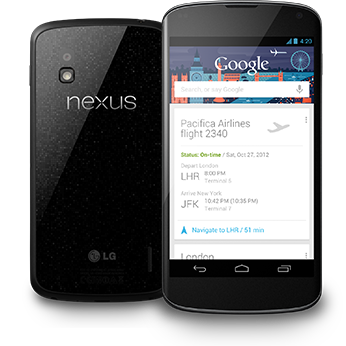
The Nexus 4 is the fourth Nexus phone, the successor to the well-recieved Galaxy Nexus. The Nexus program is Google’s initiative to pick what it thinks to be the best Android phone on the market, modify it to their liking and load it up with stock Android goodness. This year they have picked the Optimus G, LG’s quad core beast of a phone. They’ve replaced the plastic for glass, added onscreen buttons, and made it a lot more like the Galaxy Nexus in terms of size and shape. Inside, there is a Quad-core Snapdragon S4 Pro processor, a 2100mAh battery and a 1280×768 IPS LCD display at 320 pixels per inch. Pricing is £239 unlocked at 8GB and £279 at 16GB. As you can tell, these are some great prices!

Nexus 10

Nexus 10
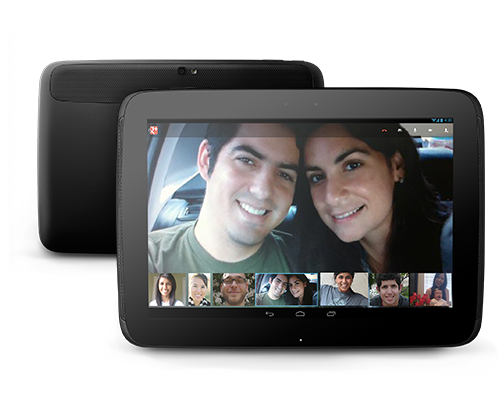
The Nexus 10 is a new device for Google. While they have made the Nexus 7, this tablet is set to go face to face with the iPad. It does bring quite a set to the table though, with a  2560 x 1600 True RGB Real Stripe PMS display, Exynos 5 dual processor and 2GB of RAM. The tablet is said to be ‘grippy’ and has a vaguely curved design and brushed metal back. While the design is not to my liking, I’m sure others will like it. It also includes a huge 9000mAh battery. Pricing is £319 for 16GB and £389 for 32GB.

Android 4.2

Android 4.2 is more of an incremental upgrade, but it still brings some great new features to the table. Here is a quick rundown

Photo Sphere
Allows for panoramas that capture everything around you, not just a strip.

Gesture Typing
This is a new feature in the keyboard which is similar to Swype. It lets you glide your finger from letter to letter to spell out words.

Multiple User
This allows for multiple users to have accounts on a tablet – similar to different User Accounts on Windows

Daydream
This is basically just hyped up screensavers.

Miracast/Streaming
Basically a Google Airplay competitor

Widgets on the lockscreen
What the title says^