After introducing themselves and their initial 4G plans to the UK last month, EE CEO Olaf Swantee today confirmed that the nation’s first LTE network will go live on October 30th. The network will initially become active in Birmingham, Bristol, Cardiff, Edinburgh, Glasgow, Leeds, Liverpool, London, Manchester and Sheffield, and service will expand to Belfast, Derby, Hull, Nottingham, Newcastle and Southampton before the year is out. From that point, their ambitious rollout plans expect to have 70% of the country covered by the end of 2013, with this figure increasing to 98% a year later, matching their current 3G footprint. Device-wise, 7 compatible phones and 2 mobile broadband devices have had compatibility confirmed. These are:
Pricing and availability for these devices have yet to be confirmed, but the press release also confirms a forthcoming event where full details will be announced. As for customers who have already purchased the iPhone 5 from T-Mobile or Orange, they will be able to switch networks at launch.
Press Release
Statement to be attributed to Olaf Swantee, CEO, EE
We are delighted to announce that the official launch of our new customer brand, EE, offering the UK’s first superfast mobile 4G and fibre broadband service, will take place on the 30th October 2012. This is a significant milestone for the United Kingdom, and for the people and businesses of our country who will now be able to enjoy the huge advantages of superfast 4G technology for the first time. We are very proud to be pioneering, innovating and leading our industry in launching 4G for our nation through our new EE brand.
Notes to editors:
1. EE will be releasing invitations to a press event shortly to announce full details of its new brand and exciting new superfast services.
2. EE will be the first brand in the country to offer a mobile 4G LTE service, the pioneering new technology that offers superfast mobile internet at speeds typically five times faster than 3G speeds today.
3. EE will launch 4G in ten cities on the 30th October, and will cover 16 cities – a third of the UK population – by the end of the year. Customers on the EE brand will also have access to the biggest and best 3G network in the UK. Further towns, cities and rural areas, will follow rapidly with coverage to reach 98% by 2014.
4. 4G technology provides indoor and outdoor coverage for superfast web browsing.
5. EE’s 4G services will be available on a number of exciting handsets including the iPhone 5, Samsung Galaxy S III LTE, Nokia Lumia 920, Nokia Lumia 820, HTC One XL and the Huawei Ascend P1 LTE.
September’s been a pretty crazy month of announcements, and now HTC are trying to impress us with their showing in New York. New Windows Phone 8 devices are expected, although an updated One X is also rumoured. Whatever happens, we’ll bring you the latest news here! Continue reading →
At an event in London today, Everything Everywhere, the company that was formed from the merger of Deutsche Telekom and France Telecom’s UK operations, announced their ambitious rollout plans for the UK’s first 4G LTE network. CEO Olaf Swantee also confirmed that the T-Mobile and Orange brands would remain in action, but the 4G network, along with superfast fibre broadband, would be marketed under the new EE brand.
EE’s 4G network, known as 4GEE, is set to initially launch in London, Birmingham, Cardiff and Bristol, with 12 more cities set to receive 4G by the end of 2012, covering a third of the UK population. By 2013, this figure is set to rise to 70%, and EE’s current 3G mark of 98% coverage will be matched in 2014 if all goes to plan. Speeds are expected to peak at around 25Mbps, but EE is advertising average speeds of 8-12Mbps at launch, in line with peak 3G speeds across the country.
The range of devices that will support the network is very limited, featuring 5 phones and 2 mobile broadband devices, but Swantee hinted at further announcements during the press event. Apple’s new iPhone, set to be announced tomorrow, is expected to carry support for LTE networks, but has been rumoured that support for UK networks such as EE’s may not be present in this generation of iPhone. The full device range announced today is below, and both Nokia devices, announced last week, are set to be exclusive to EE in the UK.
After declining sales and being criticised for releasing too many handsets into the market, the new One series from HTC represents a much needed refresh of their strategy. What once used to be a floundering attempt to satisfy the demands of the many carriers has been diluted to this, a trio of phones to carry them headfirst into 2012. The One X, however, is even more than that. This sits on the top of the tree as a superphone with specs that raise the bar for future Android devices to come. It also debuts with HTC’s refresh of their Sense skin, layered on top of Android 4.0.3, fresh from Mountain View. Alas, we must ask the question – is it really as good as it seems? Read on to find out.
Unboxing
Video Review
Hardware
To say that this phone is good looking is an understatement. The phone is genuinely beautiful and is a breath of fresh air compared to the dull black slabs that most companies are churning out these days. The amount of detail and care put into this design definitely shows in the product. The glass covering the screen curves over the sides, blending in with the sleek polycarbonate body. The One X is made of a similar material to Nokia’s Lumia 800 and 900, albeit a little less textured. It is 8.9mm thick, which, while chunky for a flagship phone on paper, certainly doesn’t feel it. The phone feels comfortable in the hand despite its 4.7″ display, and is in reality not much larger than most 4.3″ devices such as its baby brother, the wafer-thin One S. The bezel is minimal, and you really feel like you are actually touching the content on the screen thanks to the laminated panel. The only slight annoyance I have is that I do struggle to reach the top left and bottom left hand corners without adjusting my grip on the phone. It has a curved profile reminiscent of the Galaxy Nexus, with the top and bottom gently tapering upwards. It is worth noting that the camera lens protrudes just enough to give the speakers a megaphone effect when placed on a table.
The sides are fairly minimal, with the left holding an MHL (MicroUSB/HD Video out) port and a volume rocker on the right, which is conveniently placed where your thumb grips it during normal usage. It has a nice amount of travel and you can use it while it is in your pocket. On the top there is a power button, 3.5mm headphone jack and a microSIM tray. On the bottom there is one of the two microphones (the other being just next to the headphone jack) and three capacitive buttons which cause some concern that I shall get into later. A notable omission is a camera button – a little strange considering that the camera is HTC’s major advertising point with the phone. However, the care and attention to detail that HTC employed when designing this product is apparent is the notification LED. While it is not RGB, it is integrated into the drilled holes for the earpiece, which was a very interesting idea, and it works. The LED is completely invisible when not in use, and bright enough to be visible in any light when notifying you. As a whole, the design of the phone immediately strikes you as HTC. It seems like they have perfected their design language, with none of the failings of the myriad of phones that came before, although it isn’t without fault. The black international model which I acquired picked up grease really easily, and as of the time of writing I have not been able to remove it. I would recommend picking up a case if you are considering this phone, despite what HTC says. Another thing that I have noticed is that the micro-holes for the earpiece, while aesthetically pleasing, could easily pick up dust, blocking it up.
As for internals, it is safe to say that this is one of the most powerful phones on the market. The international One X has a quad-core Nvidia Tegra 3 clocked at 1.5GHz which is no slouch at all. It also has a gigabyte of RAM, which is par for the flagship course. These big numbers certainly show up in the benchmark scores below. Despite Nvidia’s graphical prowess, gaming performance does not live up to expectations. I have a feeling that it has something to do with the lack of RAM, or maybe the fact that that the processor is driving 921,600 pixels, but the effect is noticable. Games do seem to settle down after maybe 5 minutes of gameplay, but it is still unnerving. Another thing that I noted was that the area in between the camera and volume rocker can get really hot, but the heat was isolated to just that place, most likely due to the positioning of the processor. Speaking of the processor, the presence Tegra processor inside allows access to the Tegra Zone suite of games. These are games that are ‘optimised’ for the Tegra processor with better graphics and more effects, and you really can tell the difference. There are two major omissions when it comes to the One X in terms of hardware, namely being the lack of expandable storage and removable battery, but having a replaceable back would weaken the structural integrity of the phone, so we can give HTC a pass there.
The 1280 x 720 SuperLCD 2 display on this phone may be the best display I have ever seen on a phone, with vibrant colours and sharp text. With a pixel density of 312 pixels per inch, the panel is not quite as dense as the 342ppi displays found in HTC’s own Rezound and Sony’s Xperia S, but it is well into the area of over 300ppi referred to by Apple as ‘Retina territory’, meanng that individual pixels cannot be distinguished by the human eye. It also lacks the PenTile subpixel arrangement infamously found on many other flagship phones such as Samsung’s Galaxy S III and Nexus, thus ensuring a higher-quality display free of jagged edges and fuzz. One of the reasons that phone manufacturers give in favour of using AMOLED in their phones is that it is thinner than LCD and allows for slimmer profiles, but HTC’s SLCD2 has shown that LCD technology is catching up, although it still remains more power-hungry than AMOLED panels.
Software
The One X comes with Android 4.0, the (second) latest operating system from Google, but the presence of HTC Sense 4 is the most intriguing software tweak. Sense has been criticized a lot in the past for its superfluous animations, flamboyant graphics, and purely idiotic design concepts made for a subpar user experience. Users have yearned for a toned down or stock Android experience, with less of the idiotism of days past. HTC says they took this into consideration when designing Sense 4, but did they do enough? Short answer, sort of.
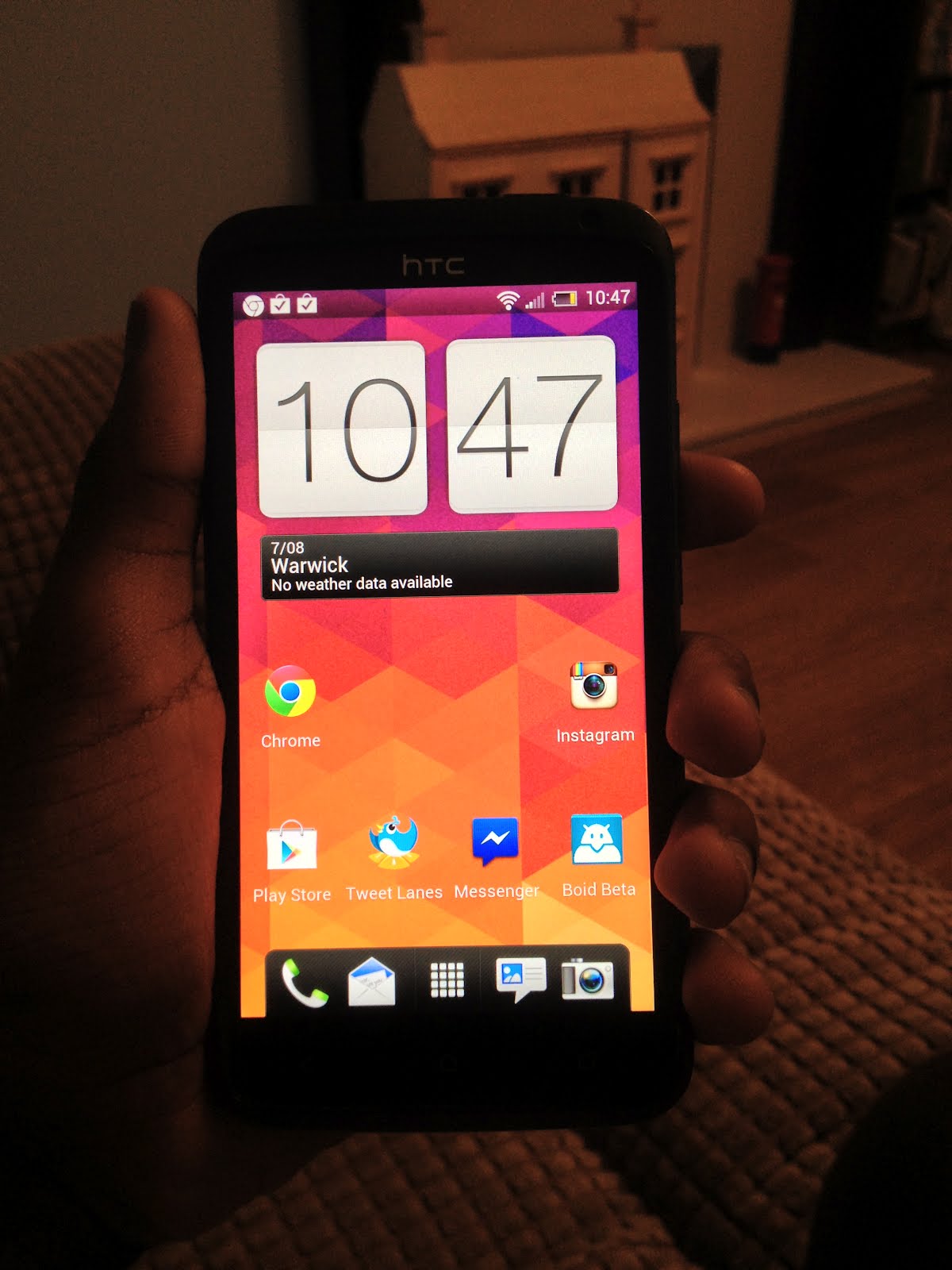
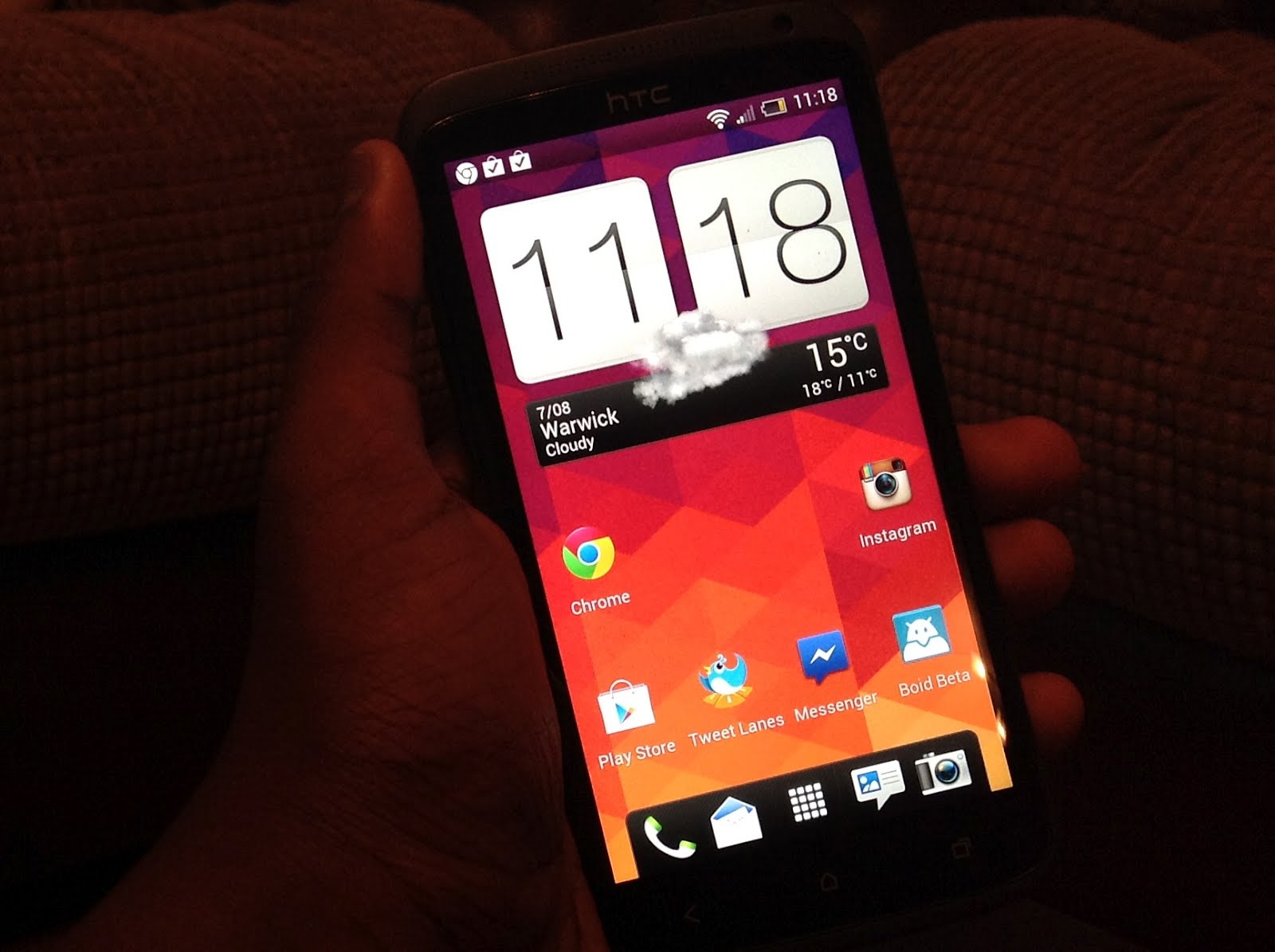
Sense has definitely been toned down. The over the top weather animations have gone. The person who made the stupid decision of having a permanent ‘personalize’ button on the dock has been fired. It’s just generally been cleaned up, but it isn’t enough. The icons look like they were designed by a 4 year old, being full of white accents and just looking dated. The recent apps list is a waste of space, with the switcher taking up the entire screen, and is also more challenging to use than the stock multitasking menu. The notion that lockscreen shortcuts can only be the icons you have in your dock is just plain stupid, because I don’t need a camera in my dock, but I certainly do on my lockscreen. The widgets look like they were designed in the 90s, with stupid gradients that make me want to throw the phone in a river. The keyboard has arrow buttons, which are completely useless and render the keyboard almost impossible to type on. Finally, I said in the hardware section that the capacitive buttons had a problem. Sticking to the Android 4.0 guidelines, there is no menu button but this means that legacy apps need to display an annoying black bar underneath any app that isn’t optimized for ICS. I would have much preferred software buttons or a menu button instead of a multitasking key, similar to the setup on the Samsung Galaxy S III.
I will admit that Sense does have its perks, 25GB of free Dropbox space being one, but the performance of the phone is what matters, and Sense simply won’t do. I promptly refused to use Sense and flashed a build of Android 4.1 Jelly Bean onto it. This seemed to speed things up a lot, but please note that this does void your warranty.
Camera
The camera on this phone is the second best phone camera I have used after that of the iPhone 4S. The 8MP rear shooter takes bright and vivid photos with little to no blurring and an instant shutter. This is because of what HTC calls ImageSense. What this means is that there is an extra chip inside the phone just for processing images and video. This and a dual shutter mean that the One X can take pictures and video at the same time. It also gifts the One X with astoundingly fast picture taking to the point where the phone actually sounds like a machine gun when in burst mode. The camera software on this phone is second to none. It lets you take awesome pictures, is well thought out, and gives you a nice range of effects to choose from. Low light pictures weren’t great, so you’ll need to use a flash, and sometimes photos get blurred really easily. You can view a gallery of pictures here.
Battery Life & Radio
The battery life of this phone ties into the software section. With Sense, the battery is rubbish. An hour of YouTube and 15 minutes of Dead Triggerbrought me down to 50%. That might not seem that bad, but with Sense taken off and replaced by a CyanogenMod ROM I could do the same thing and only lose 20%.
The cellular radio is simply average. I got signal where most other phones get signal, however I did note that the WiFi usually displayed 1 bar lower than on other devices. I don’t know if this has something to do with the way that signal is displayed or an actual discrepancy in the WiFi, but it’s there nonetheless.
Conclusion
All things considered, the One X is a solid flagship. It is the epitome of what HTC has learned from a year of failed designs, however the phone faces some stiff opposition from Samsung’s Galaxy S III. As for which one to buy, my answer would be whichever suits you best. If you need expandable storage and a removable battery and can live with the Pentile AMOLED display, then the Galaxy S III may be your best option, but if you desire design then go with the One X. You can’t go wrong with either.
People love a benchmark, and Qualcomm has invented a new one that appears to favour their series of Snapdragon processors. In a video posted on their YouTube channel, Vidyasagar Rao, a staff engineer at the company, pits an HTC One S with a Snapdragon S4 MSM8260A chip against a Motorola Razr Maxx with a TI OMAP4430 and Samsung Galaxy S II sporting a Samsung Exynos 4 Dual chip in their new Butter benchmark test. It’s quite simple really. Butter melts at 35°C, so whichever phone runs coolest will keep the block of butter intact for the longest. We doubt this will catch on, but you can see the results by watching the video below.
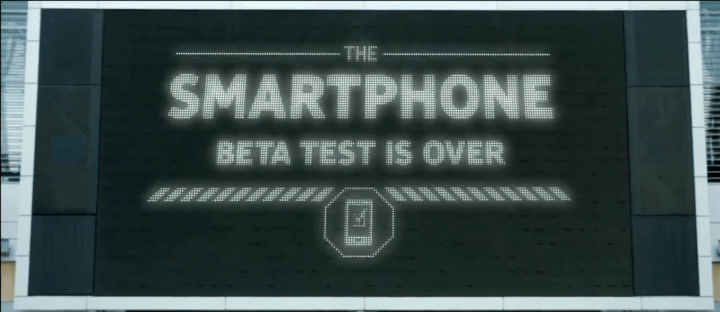
Nokia‘s Lumia 900launches this weekend, with both Nokia and AT&T promising their largest ever ad campaign – even bigger than that for the first iPhone. The Smartphone Beta Test ads, starring Chris Parnell of Saturday Night Live fame, state how every smartphone in the last 5 years has been part of an elaborate beta test.
Do you think the campaign will work? Watch the ads and vote in our poll below.
Update: Here is another ad for the phone, but not with Chris Parnell or reference to the Smartphone Beta Test. This one is pure AT&T.
With HTC’s Beats Audio division acquiring music streaming service MOG, TechCrunch has a look at how HTC is acquiring innovation rather than innovating themselves.
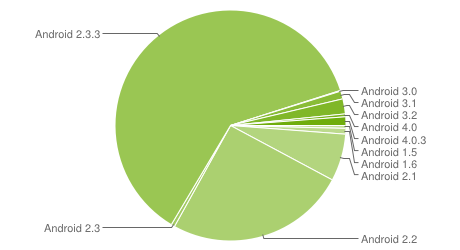
Take a look at this graphic, taken from the Android website, which shows the versions of Android which have accessed the Android MarketGoogle Play in the two weeks leading up to March 5th.
Firstly, some of the blame has to be placed on Google. The OEMs do not get access to the source code until it is publicly released, with the exemption of the partner making the flagship Nexus device, such as Samsung’s Galaxy Nexus, announced alongside Ice Cream Sandwich at a press conference in Hong Kong last year. While Google should want the Nexus phones to succeed and have an advantage over other handsets on the market at the time of release, I believe that major manufacturers such as HTC, Sony, Samsung and Google’s own subsidiary Motorola should get early access to the source code, so that handsets and devices can get the latest software promptly after it is unleashed upon the world. It is wrong to go into a store at this stage and see just one device, the Galaxy Nexus, sporting up-to-date software.
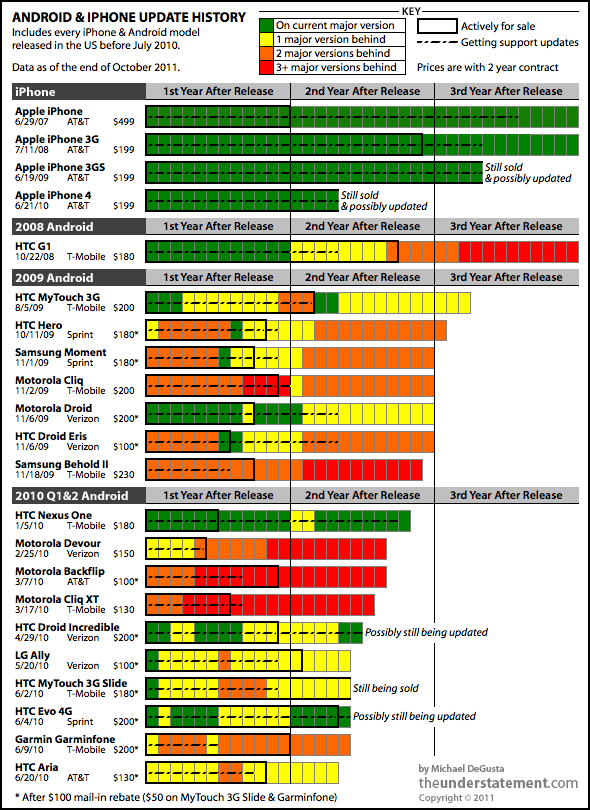
Of course, manufacturers feel that they have to stick their bloated skins on top of Android, and updates get delayed to ensure that this is the case. Take LG for example. At Mobile World Congress 2 weeks ago, they unveiled a host of new Android devices – the Optimus L3, Optimus L5, Optimus L7, Optimus 3D Max, Optimus 4X HD and the Optimus Vu phablet. Of these, half are scheduled to launch with Gingerbread, and only the L7, L5 and 4X HD are guaranteed to have Ice Cream Sandwich. As for the rest, LG issued a vague timeframe for updates of later this year. Considering that they have no plans to update their existing phones until Q2 or even Q3 at the earliest, I wouldn’t hold out much hope of this ever happening. If such an update actually does come, the community will probably have Jelly Bean stable on the handsets. LG’s excuse? A combination of the skin and the fact that they seemingly don’t care about consumers – a statement that can be applied to almost all Android manufacturers. This infographic, made last year by Michael DeGusta of The Understatement, shows just how slow these updates can be, especially compared to iOS.
Across the internet, I have seen people complaining about the update situation, only to be told to buy a Nexus phone and have all their problems solved, but this argument is ridiculously stupid. The beauty of Android is the wide variety of handsets, tailored to suit every need. To be told that, in order to be certain to get the latest software officially, you have to buy a certain device, takes away this beauty. If I wanted that kind of situation, where I no choice in form factor in exchange for a guarantee to get updates, I’d buy an iPhone. Take the Galaxy Nexus, for instance. At 4.65″, it is way too big for me. I think the design is horrible in comparison to some other smartphones, the rear camera is, for such a high-end device, sub-par for the course, and Samsung’s incessant use of flimsy plastics mean that I would never even consider buying one. If I want to get an Android phone with almost a guarantee of an update however, I have no other choice. This is not on.
So, until the day comes where updates are prompt and ensured, I will not buy an Android phone or tablet. I know that there are other ways of getting updates, but manufacturers and carriers should have a duty to ensure that devices are kept up-to-date for at least the standard contract length of 24 months. And finally, before you dismiss this whole post as pure trolling of Android, I am an Android user and I am still waiting for Gingerbread. If HTC doesn’t care about an 18 month old phone, why should I?











 Digixav