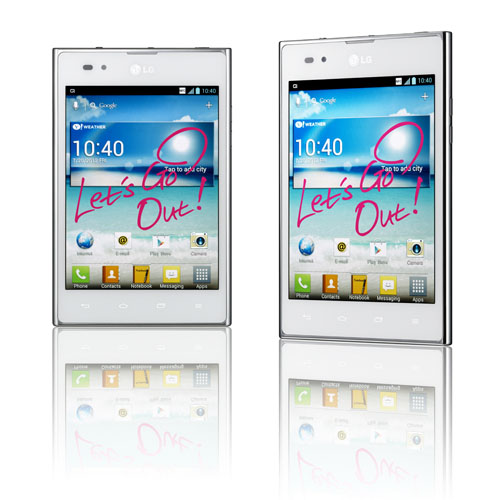
LG announces worldwide availability for Tegra 3-equipped Optimus Vu phablet

Having been announced shortly before Mobile World Congress in February, LG’s Optimus Vu has kept largely under the radar, save for launches in Japan and South Korea, but a press release today details LG’s plans for a global launch of the 5″ 4:3 behemoth, with the company hoping to get to market before Samsung’s Galaxy Note II, which is set to be unveiled at IFA on August 29th. The aging dual-core Qualcomm Snapdragon S3 MSM8660 found in existing models is getting replaced by Nvidia’s Tegra 3 chip, as found in the HTC One X that we recently reviewed, although this means that the device will not support LTE in territories with such networks. The new Vu will ship with Android 4.0, replacing the old Gingerbread build of models past, but this will, as usual, be caked in LG’s customisations, including an upgraded version of QuickMemo™. While we may not be fans of phablets, those who are interested will be able to find the Optimus Vu in stores across Europe, Asia, Africa, Latin America and the Middle East in September, but those Americans who desire the leaked Verizon LTE model will have to wait longer for official confirmation.
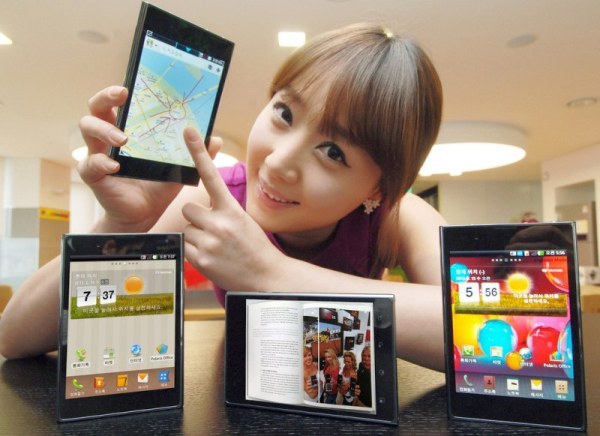
Press Release

LG ANNOUNCES GLOBAL AVAILABILITY OF OPTIMUS VU:

Largest LG Smartphone to Be Launched in Europe, Asia, Middle East/Africa and Latin America

SEOUL, Aug. 20, 2012 -– On the heels of its successful debut in Korea and Japan, the Optimus Vu: will make its global debut starting in select markets in Europe, Asia, Middle East/Africa and Latin America starting in September. With the world’s first 5-inch 4:3 aspect ratio display, the Optimus Vu: blurs the line between traditional tablets and smartphones for a truly unique smart device experience.

Since its March debut in Korea, the Optimus Vu: has sold over 500,000 units, demonstrating public acceptance of its form-factor. The reception the device received in Korea prompted LG to launch the Optimus Vu: in Japan this month, where it has also been received positively by Japanese consumers.

For the global roll-out, the Optimus Vu: will be equipped with NVIDIA® Tegra® 3 mobile processor, the super 4-PLUS-1™ quad-core with 5th battery-saver core, that offers a superb balance of performance and power requirements. 4 cores are used for high performance tasks such as games and multitasking. For voice call, email, music and video playback, only 5th battery-saver core is enabled and it consumes very less power.

When paired with the high-resolution 5-inch, 4:3 ratio IPS display, the Optimus Vu: becomes something special –- a device that’s both pocketable and spacious. The Optimus Vu: will come with an upgraded version of QuickMemo™ and Notebook, two features which make great use of the large display real estate.

“The different form factor makes Optimus Vu: unique even in the 5-inch smartphone category which we expect will catch on once they become more widely available,” said Dr. Jong-seok Park, president and CEO of LG Electronics Mobile Communications Company.

Key Specifications:

  • Android 4.0 Ice Cream Sandwich
  • 3G network
  • 5.0 inch 4:3 ratio XGA IPS display with 768 x 1024 pixels
  • 32GB memory
  • 8.0MP rear/1.3MP front cameras
  • 139.6 x 90.4 x 8.5mm
  • 168g

Via Engadget
Source LG Newsroom

Qualcomm shows off cool Snapdragon chips by melting butter on smartphones

People love a benchmark, and Qualcomm has invented a new one that appears to favour their series of Snapdragon processors. In a video posted on their YouTube channel, Vidyasagar Rao, a staff engineer at the company, pits an HTC One S with a Snapdragon S4 MSM8260A chip against a Motorola Razr Maxx with a TI OMAP4430 and Samsung Galaxy S II sporting a Samsung Exynos 4 Dual chip in their new Butter benchmark test. It’s quite simple really. Butter melts at 35°C, so whichever phone runs coolest will keep the block of butter intact for the longest. We doubt this will catch on, but you can see the results by watching the video below.

Why you don’t need a quad-core phone

“OMG I’ve seen this totally cool new phone, I really just have to get it!”

“Oh really? What is so good about it?”

“It’s got a quad-core processor”

“What does that mean?”

“I have no idea. However it sounds WICKED!!”

Companies trick you into thinking that you always have to have the latest thing, and the today’s society pressures you into believing all the given specifications are absolutely amazing. However, the truth is, some of it just isn’t needed. Why would you want a quad-core processor? To have a faster phone obviously. However you will never need that much power, nor will you ever use it! People say they need the power for gaming; however computers that don’t have quad-core processors have been used for gaming for so many years and are completely fine. Also why would you want to play high quality games on your phone? The screen is so small and the graphics are such poor quality that it isn’t worth it, not if you want anywhere near decent detail and picture. My phone (HTC Sensation) has a dual-core processor; and that works sensationally. I can multitask efficiently, I can play music whilst on the internet and texting and running social apps in the background. I can receive emails and play on apps at the same time. The speed is fantastic and you really couldn’t need a faster phone.

Quad-core costs a lot more money and quite frankly, it isn’t worth it. You may think it is cool to have it, however you will never use all four processors at once, and so you will never notice the fact that you have them.

Nokia Lumia: Meet the new king of smartphones

The Nokia Lumia range was launched on Wednesday morning at the annual Nokia World event in London. Along with the Asha range of budget Series 40 phones for the next billion internet users, Stephen Elop’s company unveiled the Lumia 710 and the flagship 800. This announcement would be the most important event in the history of Nokia. Symbian was seen by many as a disaster (THE FONT!) and MeeGo only appeared on one device before becoming Tizen. For Microsoft it was important as well. Windows Phone 7 has been well received, but has failed to gain traction in the overcrowded (by Android) smartphone market. Together they could rejuvenate both their brands with affordable, premium devices, full support, backing and promotion from networks and a multi-million pound ad campaign everywhere you look.

And that’s exactly what they’ve done.

Continue reading →

Nokia Lumia first impressions

The two new Lumia phones both look very good. The Nokia Lumia 800 for a start looks fantastic. With a 3.7 inch AMOLED display, a huge 1.4GHz single core Snapdragon processor and 16GB of internal storage (along with the 25GB of free cloud storage that comes with all WP7 phones via SkyDrive) it can compete with most other smartphones. It also has a 1GB RAM and a wonderful 8 megapixel camera with 720p HD recording and Carl Zeiss optics. The Lumia 800 is looking to be a great phone.

The Lumia 710 is the mid range Nokia WP7 device but in spite of this it still seems to have impressive internal hardware. With the same display as the 800. The camera is a decent 5 megapixel, and it also has the same 1.4 GHz procesor. However from the pictures we have seen the 710 looks quite cheap and tacky compared to the sleek look of the 800. However the idea of the swappable covers is good and the fact that Nokia are making them the same colours as the tiles on the home screen for Windows Phone is pretty good too.

Both Lumia phones look to be successful in my opinion.