
Research from Flurry suggests that Amazon’s Appstore, currently US-only, generates more revenue per daily user than Google’s own Play Store, formerly known as the Android Market.
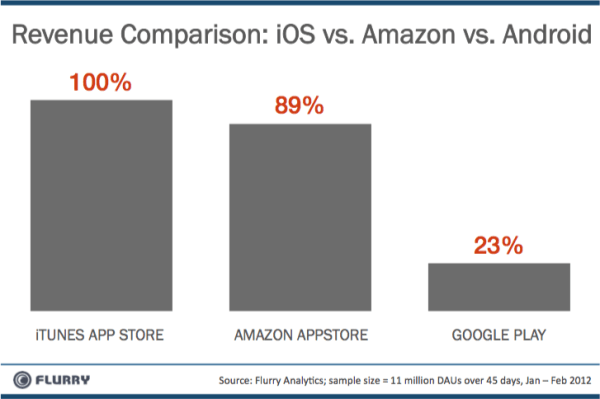
Research from Flurry suggests that Amazon’s Appstore, currently US-only, generates more revenue per daily user than Google’s own Play Store, formerly known as the Android Market.

We all know how ridiculous Android device names can be, but this chart from the Intercom Blog really alarms me. To quote the author:
If your product isn’t a condom then don’t name it like one
Don’t know what I mean? Have a look below.

NB: There is actually a phone called the LG Rumor Touch, but it is a dumbphone so it doesn’t count here. This is an advert for it:


Last week, we reported that the Game Group was set to enter administration, and now the company has confirmed the inevitable. 277 of their 609 UK stores have now shut, and 2,104 jobs have subsequently been lost, amounting to roughly 40% of the workforce. Reward Card/Elite points can still be collected but not redeemed, and gift cards are also useless for the time being. No trade-ins, exchanges or returns will be accepted, and there is a halt on pre-orders until further notice. A full list of the closed stores from MCV can be found below, so have a check there to see whether your local branch is facing the chop. Thankfully, my local Gamestation in Haywards Heath is still open, so I can breathe easily for the next couple of days at least, but let’s hope that somebody steps in to rescue one of the few retailers that people actually like. The group’s press release follows:
Further to our announcements of 21 March, the Board of Game has completed its discussions with lenders and third parties without resolution, and has therefore today appointed PWC LLP to act as administrators for the Group. This decision is taken after careful consideration and ceaseless interrogation of every possible alternative. The Board would like to thank the teams of Game and Gamestation colleagues around the world for their exemplary dedication, passion and professionalism.

British retailer Game has announced plans to go into administration, shortly after de-listing from the London Stock Exchange. With the announcement, the chain, which has 1,270 stores under the Game and Gamestation brands in Europe and Australia, plans to operate as normal, while trying to find a buyer. Rumours have circulated that American retailer GameStop might take over the UK’s largest specialist game retailer, but, with shares haven fallen 71% in the past year and games such as Mass Effect 3 not being in stock due to credit problems, consumers may soon have to look elsewhere for their games. Read the full press release below.
Further to this morning’s announcement of the suspension of trading in shares of GAME Group plc, the board has concluded that its discussions with all stakeholders and other parties have not made sufficient progress in the time available to offer a realistic prospect for a solvent solution for the business. The board has therefore today filed a notice of intention to appoint an administrator.
In the short term the Board’s intention is that the business will continue to trade and discussions with lenders and third parties will continue under the protection of the interim moratorium.
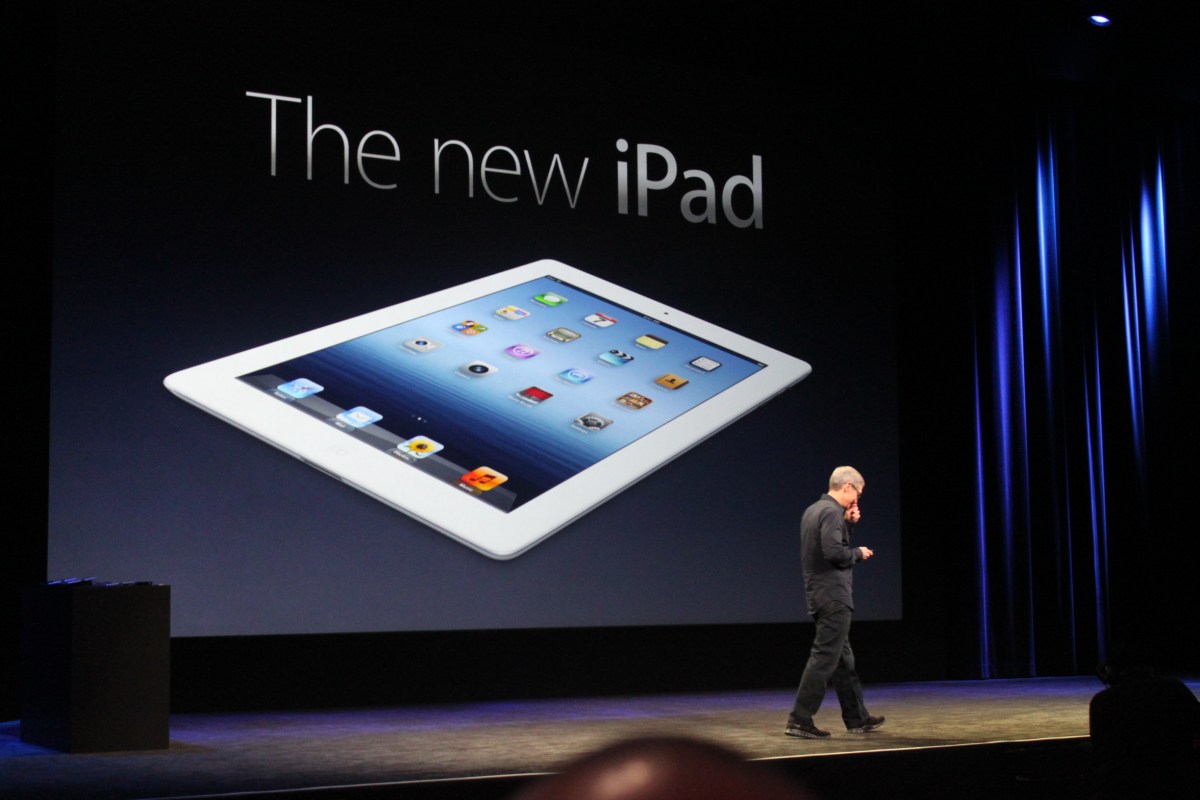
Announced just over 1 week ago, Apple’s new iPad is now available. The ‘resolutionary’ tablet sports a 2048 x 1536 display that covers 9.7″, doubling the pixel density to Retina levels. The processor has received a 200MHz bump to become a 1GHz dual-core chip, while the GPU from the PlayStation Vita completes the A5X chip. 1GB RAM, a 5MP rear camera that borrows optics from the iPhone 4S and support for ‘4G’ LTE and HSPA+ networks round out the change list.
Stores will be selling the new tablet from 8am on Friday in various locations, with the UK pricing starting at £399 for a 16GB WiFi model, before progressing up to £479 and £559 for 32 and 64GB respectively. To get LTE capability as well, expect to pay an additional £100, up to £659 for the 64GB WiFi and 4G model. Do not, however, expect to pay £49.99 for it. A technical blunder from Tesco, similar to that involving Argos and the Nokia Lumia 800, priced the high-end model at this bargain level, but orders were swiftly cancelled. A spokesman confirmed:
We like to offer our customers unbeatable value, but unfortunately this is an IT error that is currently being corrected.
Will you be getting one, or does the newly reduced iPad 2 still float your boat? Let us know in the poll and comments.

The Android Market has today undergone a major rebrand as part of Google’s aim to promote content beyond apps and provide a viable alternative to iTunes. Relaunching as Google Play, the only noticeable difference other than the new logo is the fact that they are celebrating the change with a big sale across the new Play Shop for apps, Play Movies, Play Music (US only) and, wait for it, Play Books. The rebranded store will roll out across devices with Android 2.2 or later within the next few days, and Google’s shift of focus away from the Android branding will undoubtedly be followed by massive promotions to let the world know what Mountain View has to offer.


If you are on O2 or any MVNO that uses their network such as Giffgaff or Tesco Mobile, now is the time to be worried. It has emerged that the network is sending mobile numbers in plaintext to every website you visit as part of the header data. This could potentially allow sites to collect these numbers and do all kinds of things with them. Lewis Peckover has created a page to check for and display such information, and so far only O2 and their MVNOs have been displaying the number. Peckover says on the site:
To answer some questions and responses I’ve seen – no, it’s not anything client-side. O2 seem to be transparently proxying HTTP traffic and inserting this header. Another annoying feature of O2 is that they interfere with the responses from servers too. They downgrade all images and insert a javascript link into the HTML of each page. I’ve talked to customer service about this lovely feature several times, but they never have a clue what I’m talking about, let alone any idea how to opt out/disable it.
We don’t know why this is happening, but until O2 fully understand the problem of why this sensitive data is so easily accessible and how to solve it, be careful of any suspicious sites that may pop up. If you are not on O2 but still see your number in the header, let us know or tell Peckover on Twitter.
Update: Which? Magazine contacted the Information Commissioner’s Office, who had this to say:
Keeping people’s personal information secure is a fundamental principle that sits at the heart of the Data Protection Act and the Privacy and Electronic Communications Regulations. When people visit a website via their mobile phone they would not expect their number to be made available to that website. We will now speak to O2 to remind them of their data breach notification obligations, and to better understand what has happened, before we decide how to proceed.
Update 2: O2 have confirmed that this happened over their 3G and WAP networks due to accidental routine maintenance on January 10th. They have reported themselves to Ofcom and released this statement/Q&A.
O2 mobile numbers and web browsing
Security is of the utmost importance to us and we take the protection of our customers’ data extremely seriously.
We have seen the report published this morning suggesting the potential for disclosure of customers’ mobile phone numbers to website owners.
We investigated, identified and fixed it this afternoon. We would like to apologise for the concern we have caused.
Below is a set of Q&As, to answer questions we’ve been receiving. If you have further questions, do leave them in the blog comments and we will do our best to answer as many as possible.
Q: What’s happened with O2 mobile numbers when I browse the internet on my mobile?
A: Every time you browse a website (via mobile or desktop), certain technical information about the machine you are using, is passed to website owners. This happens across the internet, and enables website owners to optimise the site you see. When you browse from an O2 mobile, we add the user’s mobile number to this technical information, but only with certain trusted partners. This is standard industry practice. We share mobile numbers with selected trusted partners for 3 reasons: 1) to manage age verification, which manages access to adult content, 2) to enable third party content partners to bill for premium content such as downloads or ring tones that the customer has purchased 3) to identify customers using O2 services, such as My O2 and Priority Moments. This only happens over 3G and WAP data services, not WiFi.
Q: How long has this been happening?
A: In between the 10th of January and 1400 Wednesday 25th of January, in addition to the usual trusted partners, there has been the potential for disclosure of customers’ mobile phone numbers to further website owners.
Q: Has it been fixed?
A: Yes. It was fixed as of 1400 on Wednesday 25th January 2012.
Q: Which of my information can website owners access?
A: The only information websites had access to is your mobile number, which could not have been linked to any other identifying information we have about customers.
Q: Why did this happen?
A: Technical changes we implemented as part of routine maintenance had the unintended effect of making it possible in certain circumstances for website owners to see the mobile numbers of those browsing their site.
Q: Which customers were affected?
A: It affected customers accessing the internet via their mobile phone on 3G or WAP services, but not WiFi, between 10th of January and 1400 on Wednesday the 25th of January.
Q: Which websites do you normally share my mobile number with?
A: Only where absolutely required by trusted partners who work with us on age verification, premium content billing, such as for downloads, and O2’s own services, have access to these mobile numbers.
Q: The Information Commissioner said he is investigating – what are you doing as part of this?
A: We are in contact with the Information Commissioner’s Office, and we will be co-operating fully. We have also contacted Ofcom.

Carphone Warehouse, the largest mobile retailer in Europe, have announced on their website that they will be stocking the new Nokia Lumia 900 in the UK from June this year. This is great news for people like me who absolutely love the Lumia 800’s design but need a larger screen. On the ‘Coming Soon’ page of the site, the phone appears alongside the 710, the magenta variant of the 800, the Sony Xperia S, a couple of BlackBerries and the Prada Phone by LG 3.0. A dedicated landing page provides you with the specs and at the very bottom of the page it says expected in June 2012, however this date is subject to change. Carriers have not yet been announced, but 3 are not expecting the device which should be available unlocked from Carphone Warehouse stores.
The Nokia Windows Phones are, according to CEO Stephen Elop, the first real Windows Phones. They look and feel great, have amazing software and the polycarbonate design is one of the best out there. Now that finally there is a Lumia with a larger screen, I cannot wait to get my hands on it, hopefully with HSPA+ support. Look out for me on launch day!
Remember the HP TouchPad? When it was discontinued, it received a massive price cut that crashed sites all around the world, including that of Argos. Today, a similar, albeit unintentional, price cut occurred but this time for a device that has been well-received. Completely out of the blue, an online only deal popped up that included an unlocked Nokia Lumia 800, our favourite thing of 2011, priced at just £119.99. Bewildered consumers flocked to mop these up and sites such as The Verge seemed to have confirmation from the company that this was indeed a real offer.

But no, it seems that Argos in fact made a ‘pricing error’ and that the offer was not legitimate. Customers received emails telling them that there had been a mistake coinciding with the launch of their latest catalogue and that the orders would be cancelled with money refunded within 7 days. This hasn’t been the first time that this kind of thing has happened at Argos, and, as I write this, the “deal” is still online, over 14 hours after the supposed sell-out. Maybe it’s time for Argos to get their act together.

Let’s face it. We all buy technology of one form or another. Many of us buy our gadgets online for savings and sheer convenience, but sometimes you need to actually try something before you buy. High street stores are everywhere these days, complete with friendly and ‘knowledgable’ salespeople to guide you to the right products and decisions, but not all is as it seems.
Circulating around Digixav are numerous stories of employees at leading British retailers not having a clue about the products and services that they are trying to sell to the public. Here I have compiled a list of some of the worst of our experiences for your entertainment and warning. Remember that all of these stories are true and have been witnessed by the Digixav team.


In conclusion, don’t believe everything you hear in tech shops. If you are in such an emporium and you hear an incompetent buffoon misleading a fellow consumer, don’t be afraid to butt in and steer them on the right path. Not all salespeople are terrible but the retail industry lacks people with a passion for technology and this is a sorry state for it.
If you have your own high street tale of woe, leave it in the comments or email it to us here.
 Digixav