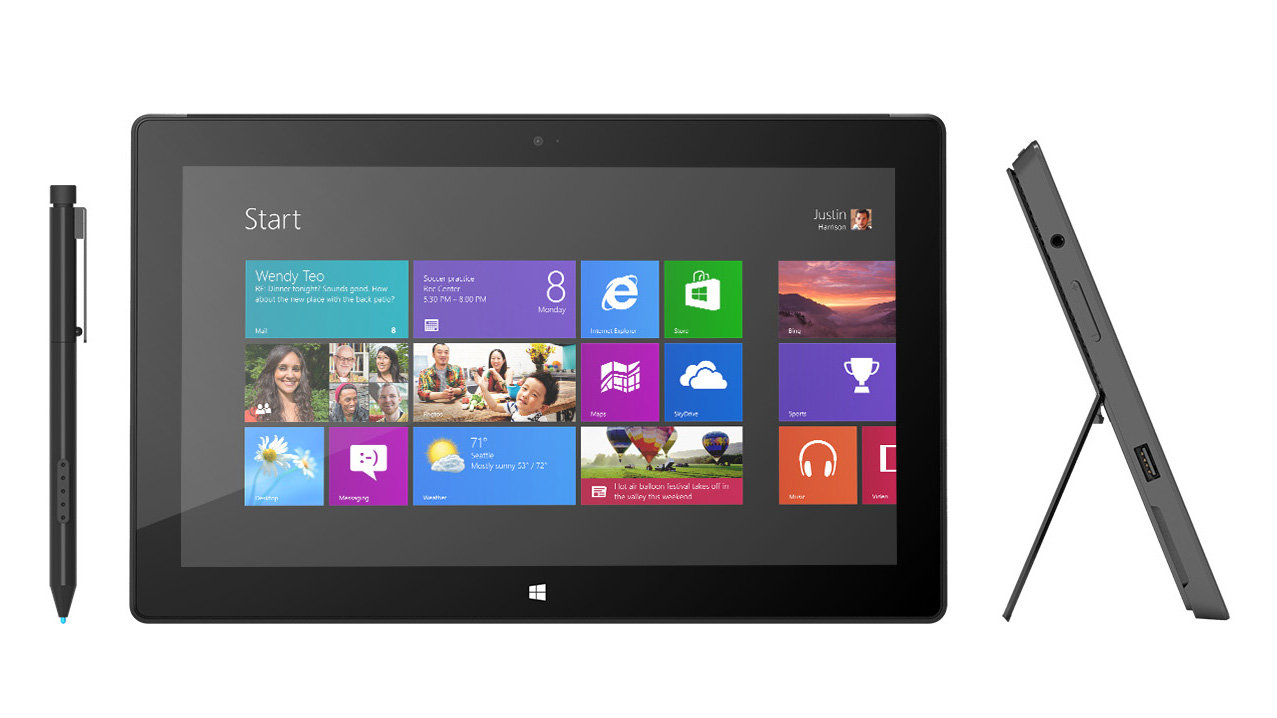
Microsoft finally announces release date and pricing for Surface Pro

Surface-Pro-with-penThe Surface Pro, the big brother to Microsoft’s Surface RT which was released in October last year, won’t go on sale in January as originally planned, but you will be able to have one in your hands by February 9th. On the bright side, Microsoft do seem to have admitted defeat with their Surface RT retail strategy, which was so bad that it was nominated for our biggest failure award – the Seattle-based company says that the Surface Pro will have wide retail availability beyond just Microsoft.com and Microsoft Stores.

We knew that Microsoft were targeting the high-end market with the Surface Pro, but even so the prices they’ve announced do seem extortionate. The minimum you’ll find yourself paying for one is $899, for the 64GB version with no covers included. The 128GB model will add $100 on to that price. The Surface RT 32GB tablet, the cheapest member of the Surface family you’ll find, would set you back $499, so there is obviously a significant difference between the RT and the Pro. Like with the its little brother, if you want to buy a keyboard cover for your Surface Pro it will cost $119 for the Touch Cover or $129 for the Type one. Microsoft will throw in a free pressure-sensitive pen in the box too.

On the same date as the Surface Pro is released, Microsoft have announced that a standalone 64GB will be made available for $599 – previously you could only buy it as a package with the black Touch Cover for $699.

It’s nice to finally get some genuine information on the Surface Pro, but we really feel that the large price tag will put a lot of potential consumers off buying one. Mind you, Microsoft do seem to be aiming here to make something which will completely replace your laptop or desktop PC, whereas previous tablets have only really been able to be used in conjunction with another device, to do all the ‘serious’ stuff on. The Surface Pro will certainly be an interesting one to watch, but personally we can’t see it taking off.

Via Engadget

Vote now for the 2012 Digixav Readers’ Choice Awards!

It’s the end of the year, and that means it’s time for us to dole out a few awards to the best assorted technological things that we’ve come across over the course of the last 12 months. As with last year, our own picks have already been made and shall be revealed on the stroke of 2013, but this year we’ve decided to create some Readers’ Choice prizes as well. There are ten categories (each with five nominees) which are as follows:
Best smartphone
Best tablet
Best mobile OS
Best desktop OS
Best computer
Best design
Best game
Best Android app
Best iOS app
Best Windows Phone app
To find out the nominees and cast your vote, click here to go to the voting form and let your voice be heard. You have until 00:00 GMT on Saturday 29th December to get your submissions in, and results will be posted very soon after that.

Happy voting!

CLICK HERE TO VOTE!

Samsung Unpacked liveblog: Galaxy Note II, Ativ S Windows Phone, Ativ Tab Windows RT tablet, Ativ Smart PC Windows 8 convertible tablets, Galaxy Camera and more!

Samsung’s Unpacked event will be held at IFA in Berlin tonight, and the rumour mill is in full swing. We already know that the successor to the Galaxy Note will be shown off, and sources seem to suggest that an Android based camera and convertible Windows 8 tablet will also appear. Needless to say it’ll be a busy night, and we’ll have all the news on this page as it happens, so join us on a fantastic journey!

Continue reading →

Microsoft to buy enterprise social network Yammer for $1.2 billion

Seemingly unwilling to let anyone else have any limelight, Microsoft today confirmed their oft-rumoured acquisition of self-proclaimed enterprise social network Yammer. Having announced a deal for $1.2 billion in cash for the company, Microsoft plans to combine the network, which launched in 2008 and has been presented with various collaboration awards, with its SharePoint collaboration tool to provide a market-leading enterprise experience, proving that it’s not all about the consumer to Ballmer and the folks in Redmond. To help illustrate their point, the company made up a handy infographic explaining why Yammer and Microsoft are a perfect fit for each other, along with the obligatory press release that can be found below.

REDMOND, Wash., and SAN FRANCISCO — June 25, 2012 — Microsoft Corp. and Yammer Inc. today announced that they have entered into a definitive agreement under which Microsoft will acquire Yammer, a leading provider of enterprise social networks, for $1.2 billion in cash. Yammer will join the Microsoft Office Division, led by division President Kurt DelBene, and the team will continue to report to current CEO David Sacks.

“The acquisition of Yammer underscores our commitment to deliver technology that businesses need and people love,” said Steve Ballmer, CEO, Microsoft. “Yammer adds a best-in-class enterprise social networking service to Microsoft’s growing portfolio of complementary cloud services.”

Launched in 2008, Yammer now has more than 5 million corporate users, including employees at 85 percent of the Fortune 500. The service allows employees to join a secure, private social network for free and then makes it easy for companies to convert a grassroots movement into companywide strategic initiative.

Yammer will continue to develop its standalone service and maintain its commitment to simplicity, innovation and cross-platform experiences. Moving forward, Microsoft plans to accelerate Yammer’s adoption alongside complementary offerings from Microsoft SharePoint, Office 365, Microsoft Dynamics and Skype.

“When we started Yammer four years ago, we set out to do something big,” Sacks said. “We had a vision for how social networking could change the way we work. Joining Microsoft will accelerate that vision and give us access to the technologies, expertise and resources we’ll need to scale and innovate.”

The acquisition is subject to customary closing conditions, including regulatory approval.

About Yammer

Yammer (www.yammer.com) is a leading provider of enterprise social networks with over 5 million verified corporate users including employees of more than 85 percent of the Fortune 500. The basic version of Yammer is free, and customers can pay to upgrade their network to receive advanced administrative and security controls, integrations with enterprise applications, priority customer service and a designated customer success manager.

About Microsoft

Founded in 1975, Microsoft (Nasdaq “MSFT”) is the worldwide leader in software, services and solutions that help people and businesses realize their full potential.

Note to editors: For more information, news and perspectives from Microsoft, please visit the Microsoft News Center at http://www.microsoft.com/news. Web links, telephone numbers and titles were correct at time of publication, but may have changed. For additional assistance, journalists and analysts may contact Microsoft’s Rapid Response Team or other appropriate contacts listed at http://www.microsoft.com/news/contactpr.mspx.

Forward-Looking Statements

This press release contains forward-looking statements, which are any predictions, projections or other statements about future events. Actual results may differ materially from these forward-looking statements because of a variety of risks and uncertainties about our business, which we describe in our filings with the Securities and Exchange Commission, including our Forms 10-K and 10-Q. We do not undertake any duty to update any forward-looking statement.

Things That Should Exist: The Wrist Phone

Things That Should Exist is a column by James Trickey. Things suggested are not always good ideas.

I’m back after a while without doing anything and for that I am sorry. I just have been really struggling with ideas because some people already had to go and invent everything useful or cool because they had the idea first. But I am finally back with an idea that probably already exists thank to some annoying company, or it might not in which case this will be an amazing idea.

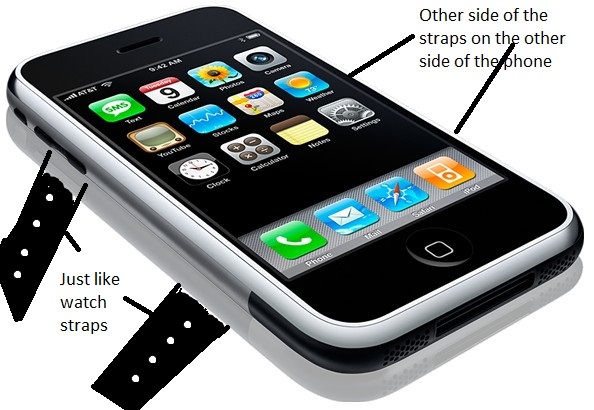
Now, as you can probably guess this invention right here is a phone, just like any smartphone or tablet that can be found in any phone shop in the country at the moment. But, as the title suggests, this is a phone that sits on your wrist the whole time. So I’m imagining a phone with straps just like a watch that allow the phone to sit comfortably on your wrist. With the help of Paint I will try and get my ideas across.

So as you can see there with the help of the OG iPhone as a tester it’s basically just a phone that you can wear like a watch and as I said already it might exist somewhere but to be honest it should still exist which is what this column is about.

But if not, then think of the advantages to this.

Firstly it will never fall out of your pocket because it’s on your wrist. I mean when was the last time your watch fell off without you noticing? Plus, this phone is going to be a lot more noticeable if it comes off your wrist due to the weight difference and the noise it will make when it hits the floor and dies.

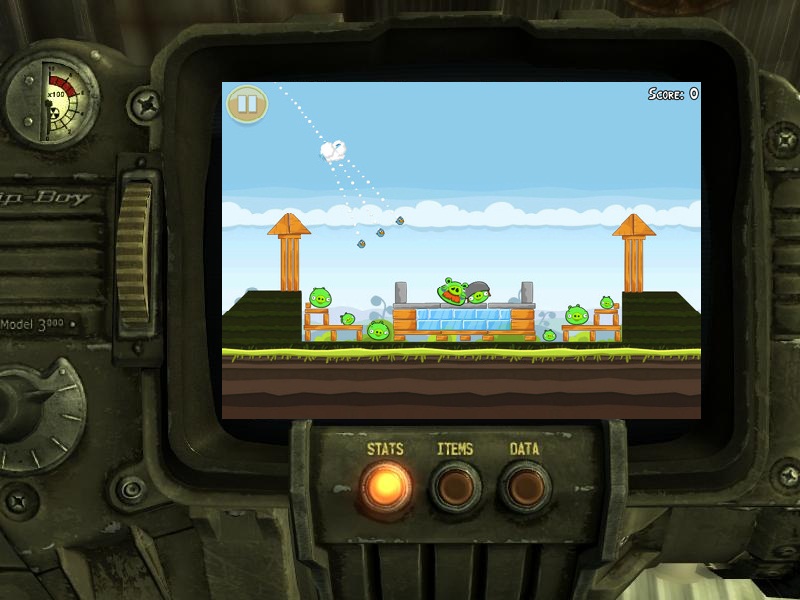
Secondly it would also just be incredibly fun to play games on something that is attached to your wrist. It would be like you were a half-robot person with a screen in your wrist! and no the Fallout games stole this idea from me. But it’s still awesome.

So that’s about it for this week. I hope that you all try and actually invent one of these things and if they already do then make them better. I’ll see you next week with a brand new idea.

Hopefully.

KABLAM!!

6.5 million LinkedIn passwords leaked by Russian hackers

Are you a LinkedIn user? If so, you might want to change your passwords, as 6.5 million passwords belonging to users of the business-centric social network have been leaked onto a Russian hacking forum. The dump contained unsalted passwords hashed using the SHA-1 encryption system, meaning that they are easily decryptable using online tools. No other information has been released, but it is possible that usernames and passwords were also compromised during the attack. Remarkably, LinkedIn’s share price ended the day up 0.09%, only to fall in after hours trading.

https://twitter.com/ryan/status/210404041031815169

In a blog post regarding the attack and password dump, LinkedIn’s Vincente Silveira explained how the company plans to deal with the compromised accounts, which make up for a small fraction of the network’s reported 161 million users.

We want to provide you with an update on this morning’s reports of stolen passwords. We can confirm that some of the passwords that were compromised correspond to LinkedIn accounts. We are continuing to investigate this situation and here is what we are pursuing as far as next steps for the compromised accounts:

  1. Members that have accounts associated with the compromised passwords will notice that their LinkedIn account password is no longer valid.
  2. These members will also receive an email from LinkedIn with instructions on how to reset their passwords. There will not be any links in this email. Once you follow this step and request password assistance, then you will receive an email from LinkedIn with a password reset link.
  3. These affected members will receive a second email from our Customer Support team providing a bit more context on this situation and why they are being asked to change their passwords.

It is worth noting that the affected members who update their passwords and members whose passwords have not been compromised benefit from the enhanced security we just recently put in place, which includes hashing and salting of our current password databases.

We sincerely apologize for the inconvenience this has caused our members. We take the security of our members very seriously. If you haven’t read it already it is worth checking out my earlier blog post today about updating your password and other account security best practices.

To find out if your password is included in the list, head to LeakedIn which will take your password and hash it using the same SHA-1 encryption, before checking for presences of that hash in the list of passwords. Mercifully mine was not published, but the Digixav offices do have a number of passwords in the leak. Buzzfeed’s John Herrman used the tool to check for some possible passwords, both common and hilarious, and created a list of the best 23. Even if you are not affected by this attack, it should serve as a good reminder to constantly change your passwords and make them unique, but not to make them anything like these.

https://twitter.com/jwherrman/status/210448244545814530 https://twitter.com/jwherrman/status/210451294207479808 https://twitter.com/jwherrman/status/210451845049618432

Why reviews need honesty

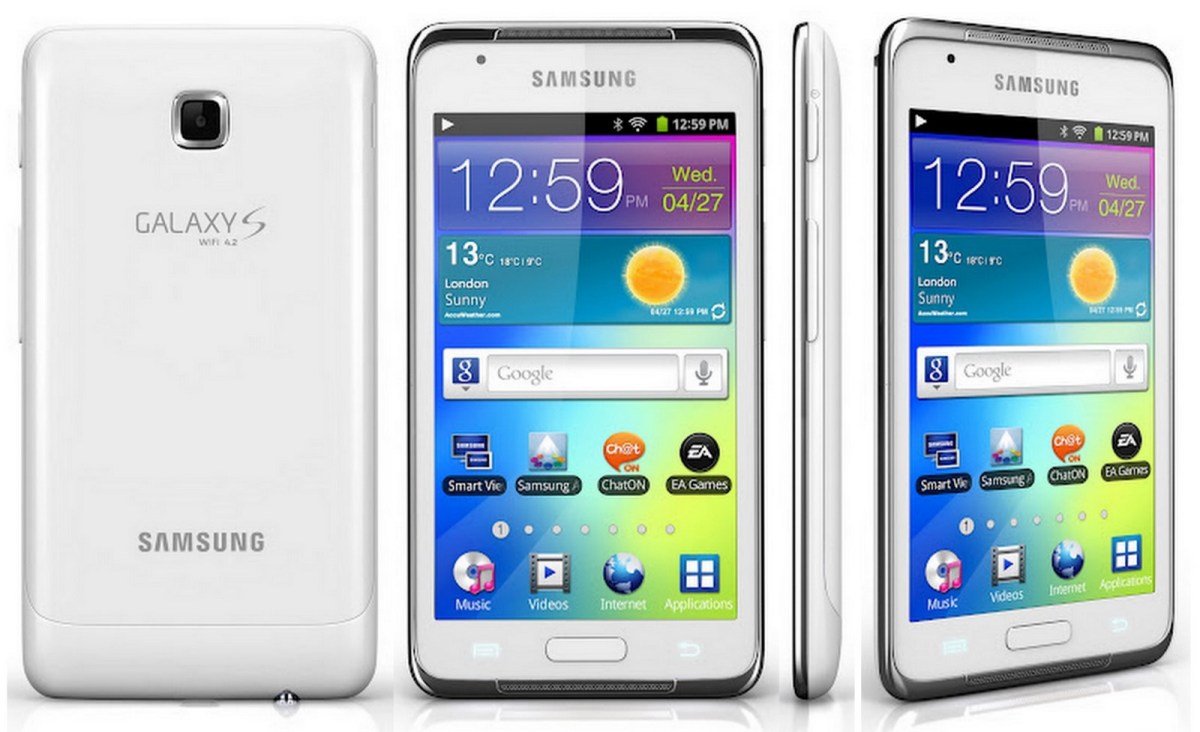
Reviews exist for a reason. You read them to find out opinions about products, and, as such, you want people to be honest about the stuff that they are writing about. Reading David Pogue’s review for the New York Times of the Samsung Galaxy Player 4.2 made me angry as, like Buzzfeed’s Matt Buchanan pointed out all too well, the author is trying too hard to be nice. Being nice about something will make it seem good. If it is not good, don’t try and fool the reader with your feigned attempt at praise.

The Player 4.2 is beautiful. Its plastic shell, with comfortably rounded edges, can’t hold a candle to the mirror-finish metal back of the Touch, but of course it doesn’t hold fingerprints, either.

You’ll probably need to buy a memory card, in fact, since the Player comes with only about four gigabytes of free memory for your files. But the point is: the capacity of your Player is up to you. Choice is good, right?

In the end, the Player should hold special appeal for a significant customer niche: rebels. The technologically sophisticated. People who would enjoy the freedom of removable cards and batteries. Parents who might like that peculiar business about making phone calls through a cheaper phone. People who own recent Samsung televisions (the Player doubles as a remote control). Anyone with a dominant anti-Apple gene.

Otherwise, it’s not entirely clear who would benefit by this slightly thicker, slightly heavier, slightly less refined iPod Touch. Until that question is answered, it’s hard to imagine Samsung’s latest becoming a significant Player in the Galaxy.

Once again, as much as it pains me to say it, I find myself in agreement with Mr. Massive Greatness himself, MG Siegler.

I don’t know about you, but when I read my favorite technology writers, I want an opinion. Is the iPhone 4S the best smartphone, or is it the Galaxy Nexus? I need to buy one, I can’t buy both. [Josh] Topolsky never gives us that. Instead, he pussyfoots around it. One is great at some things, the other is great at others. Barf.

Fucking pick one. I bet that even now he won’t.

This is the problem I have with most technology reviews these days. Everyone seems so afraid to say how they really feel about the device. And more often than not, that’s exactly what readers want.

Reviews need opinion, not horseshit. If something is good, the review should make that clear. If something is crap, the review should make that clear. That’s why I respect Josh Topolsky. He reviewed the Nokia Lumia 900 and people went mad when he gave it a 7.0. He was totally wrong on a few things, but at least he was honest. And that’s what we strive for at Digixav. As Paloma Faith once sang, do you want the truth or something beautiful? I know what I’d rather have.

Birdwatching: Minecraft vs. Lego

Birdwatching is a column by Eddie King. Views expressed are not necessarily those of Digixav.

Many moons ago, before the red ball of fury was angry and consumed with rage at the idiots who run the world, he spent his time building the most tremendous Lego structures the world has ever seen, and spent hours planning the most complicated battle plans in an attempt to outwit the little yellow men on the other team. Now, I play Minecraft whenever I have an urge to see an insane idea of mine on a screen and soon my little brother will too. The problem is he has never spent hours on some incredibly complex technological project that will rock the world of your own innocent dreams and never feel that awesome feeling of success. The real question is, despite my nostalgia, is this really a bad thing?

There is a little thing called evolution that I am rather fond of and I consider it the ultimate succession of life. Up until now, each generation has thought of something new and old people have complained about how much easier life was or how much worse it has become. The problem is that in the last hundred years we have made technological progress at a rate which is beyond comprehension. People are getting worried because every stereotype or old wives tale which we feel comfortable in is being rewritten thanks to computers. They are attacked and teams of individuals have made it their lives’ work to prove they are bad. But are they? I think that any change society makes on a mass scale must, by definition, be positive, otherwise that change would not happen on such a large scale. Take smoking – thirty years ago it was the pinnacle of cool and advertised at or sponsoring almost every major event. Seventy years ago it was just one of the things you did like breathing. It has however been clinically proven to kill you, so they stopped the advertising and sponsorships and today smokers are shunned. People still smoke, but the ones that do know how they could be compromised. The technological revolution is a compromise and one that I have not really made. For instance, how many people – especially teenagers – who are reading this post know how to skin a rabbit? On the down side, I am a terrible zob and I can’t touch type, but I am happy with that compromise.

My point is this – the technological revolution has not yet completed revolving and the more we fight it the longer it will take. I think we should sit back and let it take its course. If it works out then great, but if not then people will change because I think one of the biggest problems today is people don’t trust themselves. There is no confidence. People have been adapting for quite a long time now and they’ve got quite good at the whole survival thing.

My brother won’t have those great memories and I might feel bad for him, but he will have other memories and other experiences that I shall not have, and so we have come to the end of this sermon. I think that people should sit back and let this period of social evolution take its course.

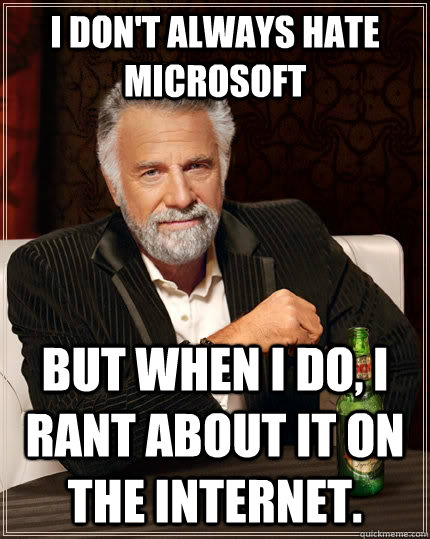
No matter how hard I try, I can’t stop hating Microsoft

The title of this article is a little misleading, as those of you who read my posts, follow me on Twitter or know me in person will know that I love Microsoft. Windows Phone is my phone platform of choice, I would never consider using anything but a Windows computer, and the thing that I want most in the world right now is a 15.6″ one of these. But even with all the love I bear for the love-child of Ballmer and Gates, there are a large number of things about them which annoy me.

The first and foremost of these annoyances is with Zune. As a Windows Phone user, I am forced to use Zune in order to update, add music and video to and do a large number of other things to, my phone. This is fine, I can add and take away music to and from my phone quickly and easily, and updates will automatically commence if they are available. But when I got my HP Pavilion dv7 with Beats Audio, I began to play music through my laptop, whereas previously I had been using speakers connected to my phone. It soon dawned upon me that Zune, a beautiful piece of software, is one of the buggiest pieces of crap since Windows Media Player. Quite often while playing music, the song will randomly pause, move to a different point or just skip altogether, and on occasion I have closed Zune to find that the song that was playing doesn’t stop playing, much to my teacher’s dismay. When this is Skrillex, chemistry lessons can be quite awkward. What the hell is up with that? A company whom incorporated software into its very name can’t be bothered or is unable to iron out the bugs in their music software. Even iTunes, something which is essentially designed to work on a different operating system and much maligned on Windows, is nowhere near as buggy. This being said, with the Zune name being dumped, and the software being incorporated into the OS, I surely hope that for Windows 8’s sake that at least some of the bigger glitches will be ironed out.

And secondly, what is the point in Windows Media Player any more? The whole thing is utter crap and nobody in their right mind would ever use it. I mean seriously, software that causes computers to blue-screen (I speak through personal experience) through use is not right in any way. And if any person out there does use this utter piece of crap, please explain to me in the comments below why you would put yourself through it. Please.

My final point is the most obvious one. Internet Explorer. This is in every way the single most hated piece of software out there. It is crap, it crashes, freezes and is only there for sane people to download either Firefox or Chrome. And, to make matters worse, you have to have specific permission from Microsoft to be able to uninstall the software. Of course, you can do what both I and Xavier (our EIC) have done and bury it deep within our program files, but it will always be there, taunting you with the possibility that you may one day, have to use it.

So those are the main reasons that Microsoft pisses off even myself, a true Microsoft fanboy. Despite the wonders of things like the Arc Touch Mouse, SkyDrive and Windows Phone, Microsoft isn’t perfect, but by ironing out the bugs and listening to consumers, they could get pretty close.